
You Don’t Need a Gym to Build a Powerful Chest
The best at home workout to build chest uses push-up variations, bodyweight exercises, and minimal equipment to target every part of your pecs — no bench press required.
Quick answer — top at-home chest exercises:
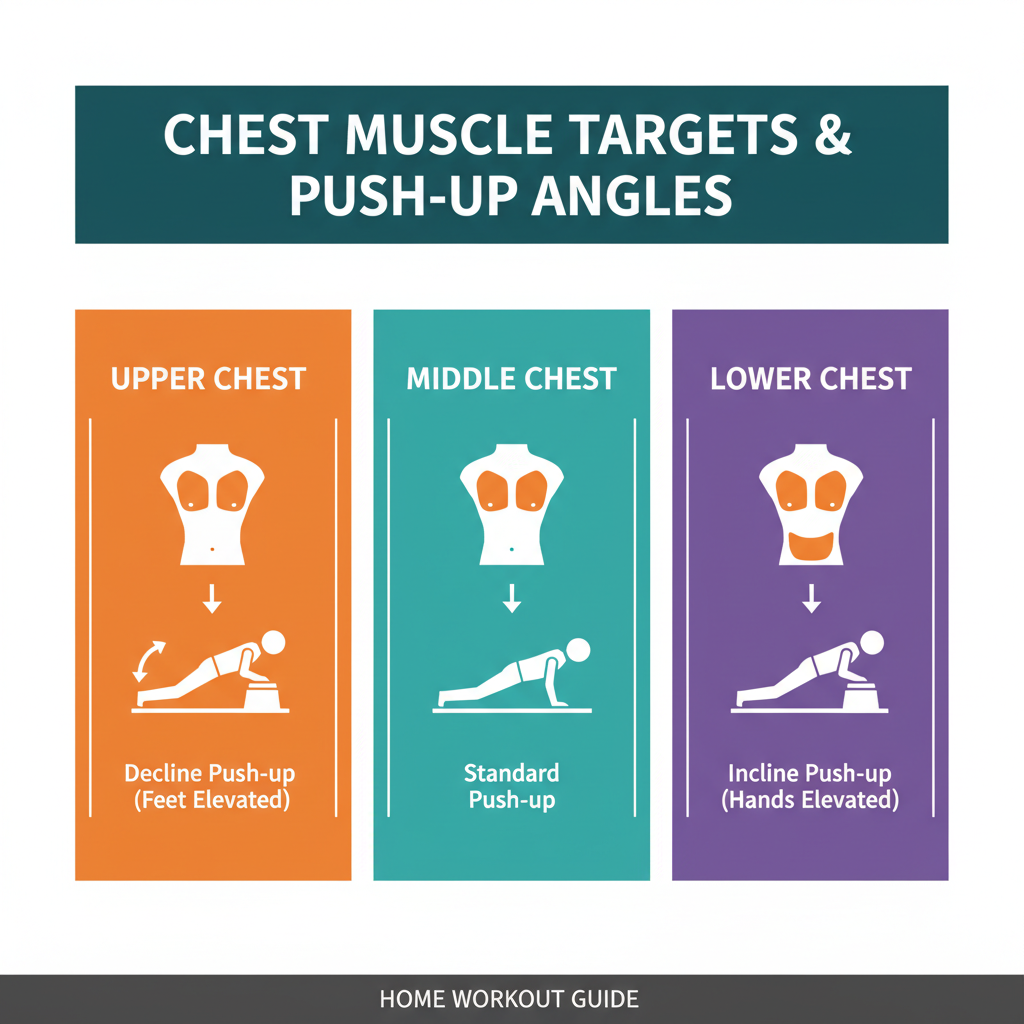
- Standard push-ups – targets the middle chest
- Decline push-ups (feet elevated) – hits the upper chest
- Incline push-ups (hands elevated) – works the lower chest
- Diamond push-ups – adds inner chest and triceps emphasis
- Sliding chest flies – isolates the pecs with full adduction
Most people assume building a muscular chest means fighting for a bench at the gym. It doesn’t. Gymnasts are a perfect example — they develop impressive, powerful chests using nothing but bodyweight training.
The secret? Hitting your chest from the right angles, with enough intensity to force it to grow.
Whether you have zero equipment or a pair of dumbbells gathering dust in the corner, this guide has a plan for you. You’ll find exercises, routines, and progression tips for every level — from first-time exerciser to seasoned athlete.
The Anatomy of a Strong Chest and Why Train at Home
To build a chest that looks like it was sculpted by a Renaissance master, we first need to understand the “canvas” we are working with. The chest isn’t just one big slab of muscle; it’s a complex system that requires different angles to fully develop.
The primary muscle is the Pectoralis Major. This is the large, fan-shaped muscle that most people think of as “the chest.” It is divided into three distinct regions:
- Clavicular Head (Upper Chest): Originates near the collarbone. It gives your chest that “full” look at the top.
- Sternal Head (Middle Chest): The largest portion, responsible for the bulk of your chest width and thickness.
- Abdominal Head (Lower Chest): This creates the defined “underline” of the chest.
Tucked underneath the major is the Pectoralis Minor, which helps stabilize the shoulder blade. According to scientific research on pectoral muscle anatomy, these muscles are essential for pushing, lifting, and even deep breathing.
So, why skip the gym? Training at home offers unparalleled convenience. There’s no commute, no “gym bros” hogging the bench, and 92% of readers find that home-based chest content is exactly what they need to stay consistent. Beyond aesthetics, a strong chest improves your posture and boosts athletic performance in sports like tennis or basketball. If you’re looking to round out your physique, check out our guide on at-home workout for upper body to see how chest training fits into a total-body plan.
Essential Equipment and Warm-Up for Your At Home Workout to Build Chest
One of the biggest myths in fitness is that you need a $2,000 power rack to get results. In reality, your house is already a gym; you just haven’t realized it yet.
The “Home Gym” Inventory
While bodyweight is king, having a few items can take your at home workout to build chest to the next level:
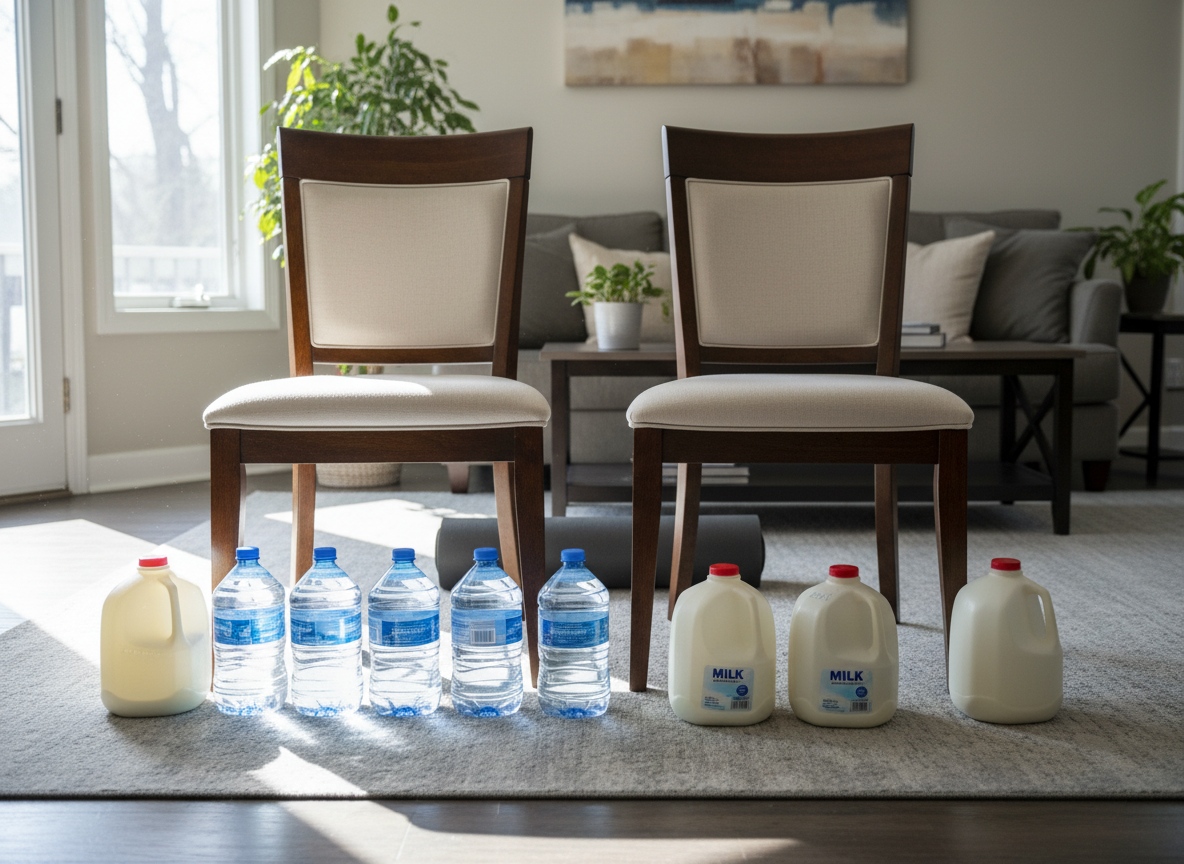
- Sturdy Chairs or a Couch: Perfect for incline or decline variations.
- Water Bottles or Milk Jugs: Excellent substitutes for dumbbells if you’re just starting.
- Resistance Bands: These are “liquid gold” for home training because they provide tension throughout the entire movement.
- Floor Sliders (or just towels on a wood floor): Essential for chest flies.
Don’t Skip the Warm-Up
We know, we know—you want to get straight to the “pump.” But jumping into heavy push-ups with cold shoulders is a recipe for a “pop” you don’t want to hear. A proper warm-up should last 5-10 minutes to improve blood flow and joint mobility. We recommend:
- Shoulder Rolls: 15 reps forward and back.
- Arm Circles: Start small, then go big (20 reps).
- Trunk Rotations: Keep your hips still and rotate your upper body.
- Bird-Dog Stretch: Great for core stability before you start pressing.
- Light Knee Push-ups: 10-15 reps just to wake up the pecs.
For those just starting their fitness journey, our beginners upper body strength workout provides a fantastic foundation. If you’re ready to move beyond the basics, explore building upper body strength with easy home workouts to see how to integrate these moves safely.
The Best Bodyweight Exercises for Every Angle
To truly grow, you can’t just do the same standard push-up forever. You need variety. Research on EMG activity in push-up variations shows that changing your hand position or body angle significantly shifts which muscle fibers are doing the heavy lifting.
| Exercise | Primary Target | Difficulty | Pro Tip |
|---|---|---|---|
| Standard Push-up | Middle Chest | Beginner | Keep your core tight like a plank! |
| Diamond Push-up | Inner Chest/Triceps | Intermediate | Form a diamond with your hands under your chest. |
| Archer Push-up | Unilateral Chest | Advanced | Shift weight to one arm while the other stays straight. |
| Wide-Grip Push-up | Outer Chest/Delts | Beginner | Hands wider than shoulders; watch your elbows! |
The goal of an at home workout to build chest is to mimic the movements of a gym without the machines. For a complete overview of how to train your whole body without a gym membership, dive into our ultimate guide to full body weight training at home.
Targeting the Upper Chest with an At Home Workout to Build Chest
The upper chest (clavicular head) is often the hardest part to grow. In the gym, you’d use an incline bench. At home, we use Decline Push-ups. By elevating your feet on a chair or bed, you change the angle of the push to about 120 degrees relative to your torso.
Interestingly, using a wide reverse grip (hands turned outward or slightly backward) has been shown to boost upper chest activation by about 30% compared to a standard grip. This is because it forces more shoulder flexion, which is the upper chest’s primary job. Aim for 3-4 sets of 8-12 reps, and don’t be afraid to walk your feet higher up the wall as you get stronger!
Building the Lower and Inner Chest
To target the lower chest (abdominal head), we do the opposite: Incline Push-ups. Place your hands on a countertop, a sturdy table, or a bench while your feet stay on the floor. This mimics a decline bench press. This 45-degree angle puts the most stress on the lower fibers of the pec.
For the Inner Chest, the secret isn’t just pushing; it’s adduction—bringing your arms across the midline of your body. Since your hands are fixed during a push-up, you can’t easily do this. The solution? Sliding Chest Flies. Place towels or sliders under your hands on a smooth floor. Slowly slide your hands out to the sides, then squeeze your chest to pull them back together. It’s intense, effective, and will give you a pump that rivals any cable machine.
Advanced Techniques and Minimal Equipment Variations
Once you can bang out 30 standard push-ups without breaking a sweat, you’ve reached a plateau. To keep building muscle, we need to increase the “mechanical tension.”
Time Under Tension and Isometrics
Instead of rushing through reps, try Tempo Training. Lower yourself for a slow 4-count, hold the bottom position (1 inch off the floor) for 2 seconds, and then explode up. This creates micro-tears in the muscle that lead to growth. You can also incorporate Isometric Holds—hold a push-up at its hardest point for 15-30 seconds at the end of a set.
Adding Resistance
If you have dumbbells, the Dumbbell Floor Press is your best friend. Lying on the floor limits your range of motion, which actually protects your shoulders while allowing you to lift heavier weights. If you’re new to weights, check out dumbbells 101 beginner friendly home strength exercises or our deeper dive into dumbbell strength exercises for home workouts.
No dumbbells? No problem. Fill a backpack with books or water bottles and wear it while doing push-ups. This is a classic “old school” way to add weight without buying a single piece of equipment.
Progressive Overload in Your At Home Workout to Build Chest
Progressive overload is the golden rule of muscle growth. You must make the workout harder over time. You can do this by:
- Increasing Volume: Doing more sets or reps.
- Decreasing Rest: Moving from 90 seconds of rest to 60 seconds.
- Grinder Style: After you hit failure on a set of push-ups, immediately drop to your knees and do as many more as you can. This pushes the muscle past its normal limits.
- Mechanical Drop Sets: Start with the hardest move (Decline Push-ups), go to failure, then immediately switch to Standard Push-ups, then finish with Incline Push-ups.
Structuring Your Routine for Optimal Growth
How you put these exercises together matters just as much as the exercises themselves. For the best results, we recommend training your chest twice a week, allowing at least 48 hours of recovery between sessions.
Beginner Routine (Focus on Form)
- Incline Push-ups: 3 sets of 10-12 reps (targets lower chest)
- Standard Push-ups: 3 sets of 8-10 reps (targets middle chest)
- Plank Shoulder Taps: 3 sets of 20 reps (builds stability)
- Rest: 60-90 seconds between sets.
Advanced Routine (Focus on Hypertrophy)
- Decline Push-ups: 4 sets of 12-15 reps
- Archer Push-ups: 3 sets to failure (each side)
- Banded or Weighted Push-ups: 3 sets of 8-10 reps
- Sliding Chest Flies: 3 sets of 10 reps
- Rest: 45-60 seconds to keep the intensity high.
For a more comprehensive schedule, you can follow our full body home workout plan or the full body weight training routine at home to ensure you aren’t neglecting your back or legs. A strong chest needs a strong back to prevent “hunched” shoulders!
Common Mistakes and Post-Workout Recovery
Even the best at home workout to build chest can be ruined by poor form. Here are the “deadly sins” of home chest training:
- Elbow Flaring: If your elbows are at a 90-degree angle to your body (forming a ‘T’), you are putting massive stress on your rotator cuffs. Keep them tucked at about a 45-degree angle.
- Hips Sagging: This turns the exercise into a weird back stretch. Keep your glutes squeezed and your core tight.
- Half-Reps: If you aren’t going all the way down, you aren’t getting all the gains. Chest growth happens most at the “stretch” part of the movement (the bottom).
The Importance of Recovery
Muscle doesn’t grow while you’re working out; it grows while you’re sleeping. According to research on muscle recovery and soreness, giving your tissues time to repair is non-negotiable.
After your workout, spend 5 minutes cooling down. Use the Doorway Pec Stretch: place your forearm on a door frame and lean forward to feel a deep stretch in the chest. Follow this with the Cobra Pose to stretch the entire anterior chain and practice deep breathing to kickstart the recovery process.
Frequently Asked Questions about Home Chest Training
Can I build a big chest with just push-ups?
Absolutely. The key is variety and progression. If you only do standard push-ups, you’ll stop seeing results. By using decline, diamond, and plyometric (explosive) variations, you can provide enough stimulus to build significant muscle mass.
How many times a week should I train my chest at home?
For most people, 2 to 3 times per week is the “sweet spot.” This allows for enough volume to trigger growth while giving your muscles the 48 hours of rest they need to recover.
What household items can replace gym weights for chest exercises?
A backpack filled with books is the best “weighted vest” alternative. For flies, you can use detergent bottles with handles. For sliding moves, use paper plates on carpet or towels on hardwood floors.
Conclusion
Building a powerful, sculpted chest doesn’t require a monthly membership or a commute. By understanding the anatomy of your pecs and utilizing the power of bodyweight angles, you can achieve professional-level results right in your living room.
At Casa e Jardim Web, we believe that fitness should be accessible to everyone, regardless of their equipment or experience level. The most important factor isn’t the weight on the bar—it’s your consistency and your willingness to push yourself to that last rep.
Ready to take your strength to the next level? Start your journey with our expert strength guides and transform your home into your personal powerhouse today!
