
Why a Push Up Challenge for Beginners Is the Smartest Way to Build Upper Body Strength
Push up challenge beginners programs are one of the most effective ways to build upper body strength at home — no gym, no equipment, no excuses.
Here are the most popular beginner push-up challenge formats to compare at a glance:
| Challenge | Duration | Starting Reps | Best For |
|---|---|---|---|
| 7-Day Challenge | 1 week | 5 per set (x4 daily) | Total beginners testing the waters |
| 30-Day Challenge | 30 days | 5 reps on Day 1 | Building a consistent daily habit |
| 28-Day Challenge | 4 weeks | 1-10 reps | Habit formation with rest days |
| 12-Week Program | 3 months | 8 reps x 3 sets | Long-term strength progression |
| Hundred Pushups | 6+ weeks | Based on fitness test | Goal-oriented structured training |
Here’s a surprising fact: more than one-third of U.S. adults surveyed said they couldn’t complete five consecutive push-ups. If that sounds familiar, you’re not alone — and you’re in exactly the right place.
Push-ups look simple. But they’re actually a full-body challenge. A standard push-up requires you to press roughly 64% of your own body weight. Even a knee push-up demands about 49%. That’s serious work for a beginner.
The good news? With the right challenge structure and a little consistency, most beginners can make dramatic progress in just a few weeks.
This guide compares the best beginner push-up challenge formats — so you can pick the one that fits your schedule, starting fitness level, and goals.
Mastering Form: The Foundation of a Push Up Challenge Beginners Program
Before we dive into the schedules, we need to talk about the “how.” Doing fifty “ego push-ups” with your hips sagging and your neck straining won’t build the strength you want—and it might actually land you on the physical therapy table. Quality over quantity is our golden rule here at Casa Jardim Web.
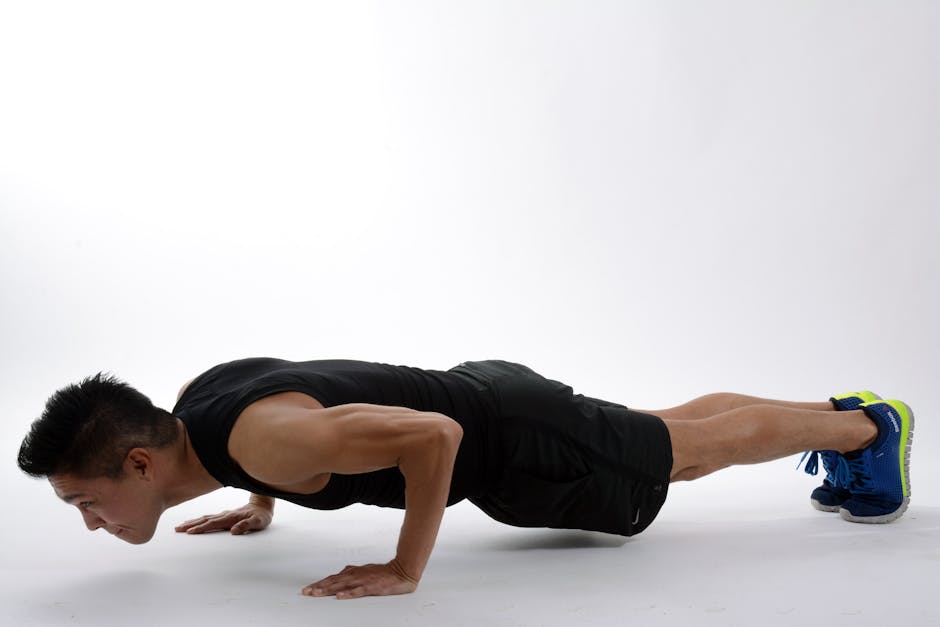
To perform a perfect push-up, start in a high plank position. Your hands should be slightly wider than shoulder-width apart, stacked directly under your shoulders. Imagine your body is a straight piece of steel from your head to your heels. If your butt is in the air or your belly is touching the floor first, your core isn’t engaged.
One of the biggest secrets to a pain-free push-up is the elbow angle. Many beginners flare their elbows out wide, forming a “T” shape with their body. This puts immense stress on the shoulder joints. Instead, tuck your elbows back so they form a 45-degree angle with your torso—think of an arrow shape rather than a “T.” This positioning is backed by scientific research on push-up kinetics, which shows that proper alignment better recruits the chest and triceps while protecting the rotator cuff. For more tips on setting up your space for success, check out our guide on building-upper-body-strength-easy-home-workouts.
Why a Push Up Challenge Beginners Program Works
Why do we love challenges? Because they take the guesswork out of fitness. A push up challenge beginners routine utilizes “progressive overload.” This is just a fancy way of saying we add a little more work each day or week so your muscles never get too comfortable.
By repeating the movement consistently, you develop “muscle memory.” Your nervous system becomes more efficient at telling your chest, shoulders, and triceps to fire at once. Beyond the physical, these programs build incredible confidence. There is nothing quite like the feeling of going from zero push-ups to ten in a single month. To see how this fits into a broader routine, explore our beginners-upper-body-strength-workout.
Assessing Your Starting Fitness Level
Don’t just pick a random number and start. You need a baseline. We recommend an “Initial Test.” After a light warm-up, perform as many push-ups as you can with perfect form. The moment your hips sag or you can’t push back up without wiggling, the test is over.
- 0-5 Push-ups: Start with wall or high-incline variations.
- 6-10 Push-ups: Start with knee push-ups or low-incline variations.
- 11-20 Push-ups: You’re ready for standard floor push-ups, perhaps with lower volume.
Knowing where you start ensures you don’t burn out by Day 3. If you are a man just starting out, you might find our home-workout-for-men-beginners helpful for rounding out your assessment.
Choosing Your Path: Comparing Popular Push Up Challenge Beginners Schedules
Not all challenges are created equal. Some focus on high daily volume, while others emphasize rest and recovery. Here is how the most common structures stack up:
| Feature | 7-Day Sprint | 30-Day Habit | 12-Week Journey |
|---|---|---|---|
| Intensity | High (daily) | Moderate (incremental) | Controlled (periodized) |
| Rest Days | None | Every 7th day | 2-3 times per week |
| Progression | Fixed reps | +2 reps daily | Increasing sets/reps |
| Best For | Motivation boost | Habit building | Serious strength gains |
If you’re looking for a comprehensive plan that covers more than just push-ups, our beginner-friendly-home-workout-plan is an excellent companion.
The 30-Day Push Up Challenge Beginners Roadmap
The 30-day roadmap is the “goldilocks” of challenges—not too short, not too long. It typically starts very small, perhaps just 5 reps on Day 1. By Day 30, you’re aiming for 50 or 60.
The beauty of this plan is that you can break the reps up. If the goal is 20 reps, you can do 10 in the morning and 10 before dinner. This “greasing the groove” method helps your body adapt without total exhaustion. This is a favorite for many in our community, especially those following our home-workout-for-women-beginners who want to see visible toning in their arms and shoulders.
The 12-Week Linear Periodization Method
If you want to move from “I can’t do one” to “I am a push-up machine,” 12 weeks is the sweet spot. This method uses “linear periodization,” which means we systematically increase the volume and then “de-load” (reduce the work) every few weeks to let your tissues repair.
A typical 12-week plan might look like this:
- Weeks 1-3: Focus on 3 sets of 8 reps (incline or knee).
- Week 4: De-load (2 sets of 8) to recover.
- Weeks 5-7: Increase to 3 sets of 10-12 reps.
- Weeks 8-12: Transition to lower inclines or full floor push-ups.
This long-term approach is the backbone of our ultimate-guide-to-full-body-weight-training-at-home.
Essential Variations to Bridge the Strength Gap
One of the biggest mistakes beginners make is trying to do floor push-ups before they are ready. If you can’t do a floor push-up yet, don’t sweat it! Use these variations to build the necessary “scapular stability” and chest power.
- Wall Push-ups: Stand a few feet from a wall, lean forward, and place your hands on the wall. This only requires about 9% of your body weight.
- Incline Push-ups: Use a sturdy table, bench, or stairs. The higher the surface, the easier the rep. A countertop push-up uses about 20% of your body weight.
- Knee Push-ups: A classic modification, but be careful! Keep your hips tucked. If your butt stays in the air while your chest goes down, you aren’t working your core.
- Eccentric (Negative) Push-ups: Start at the top of a full push-up and lower yourself as slowly as possible (count to 5). Once you hit the floor, use your knees to get back up. Scientific research on eccentric exercise for strength shows that this “lowering phase” is actually where most of your strength gains happen.
For more equipment-free ideas, see our list of no-equipment-home-exercises.
Progressing from Assisted to Standard Push-Ups
To graduate to the floor, you need to “lower the incline.” If you’ve been using the third step of your staircase, move to the second step. Once you can do 10 clean reps there, move to the first step.
Another trick is “time under tension.” Instead of rushing through reps, slow them down. This forces your muscles to work harder for every second of the movement. You can also add isometric holds—pause for 2 seconds at the bottom of the movement (the hardest part!) before pushing back up. These techniques are vital for bodyweight-exercises-for-home.
Common Mistakes and How to Avoid Them
- The “Pike” or “Sag”: Keep your core tight. If your hips drop, you’re straining your lower back. If your butt is in the air, you’re taking the weight off your chest.
- Chicken Winging: Keep those elbows at 45 degrees! Flaring them out is a recipe for shoulder impingement.
- The “Head Nod”: Don’t just reach your chin to the floor. Your chest should be the first thing that almost touches the ground. Keep your neck neutral by looking at a spot about 6 inches in front of your hands.
- Holding Your Breath: Inhale on the way down, exhale forcefully as you push up. Breathing helps stabilize your core.
For a deeper dive into avoiding injury, check out our beginners-guide-strength-exercises-for-men.
Maximizing Results: Recovery and Complementary Training
You don’t actually get stronger while doing push-ups. You get stronger while you sleep! When you exercise, you create tiny micro-tears in your muscle fibers. Your body repairs these tears during rest, making the muscle thicker and stronger than before.
To maximize your push up challenge beginners results:
- Eat enough protein: This provides the building blocks for muscle repair.
- Hydrate: Water is essential for joint lubrication and energy.
- Rest: Never train the same muscle group two days in a row if you are feeling significant soreness.
- Sleep: Aim for 7-9 hours to allow your growth hormones to do their work.
For a look at how to balance your week, see our full-body-weight-training-routine-at-home.
Warm-Up and Cool-Down Essentials
Never start cold! Spend 5 minutes getting the blood flowing to your upper body.
- Arm Circles: 20 small circles forward, 20 backward.
- Wrist Mobility: Gently stretch your wrists in all directions; they take a lot of pressure during push-ups.
- Dynamic Chest Openers: Swing your arms out wide and then “hug” yourself.
After your workout, do some static stretching. Hold a chest stretch against a doorframe for 30 seconds per side to keep your muscles from becoming overly tight, which can pull your shoulders forward and ruin your posture.
Exercises to Support Your Push-Up Progress
A push-up is essentially a “moving plank.” Therefore, a strong core is your best friend.
- Planks: Build the endurance needed to keep your body straight.
- Tricep Dips: Use a chair or the edge of your couch to strengthen the back of your arms.
- Superman Holds: Lie on your belly and lift your arms and legs. This strengthens your “posterior chain,” helping you maintain a straight spine.
- Bird-Dogs: Great for core stability and balance.
Frequently Asked Questions about Beginner Push-Ups
How long does it take to achieve my first full push-up?
It varies, but most beginners can achieve their first full floor push-up in 4 to 12 weeks of consistent training. If you are starting from a high incline (like a wall), expect it to take about 12 weeks to drop down to the floor comfortably.
Can I do push-ups every day?
While some 30-day challenges suggest daily reps, we generally recommend at least one rest day between heavy sessions. If you do them every day, keep the volume low enough that you aren’t constantly sore. Listen to your body—if your performance is dropping, you need a break.
What should I do if my wrists hurt during push-ups?
Wrist pain is common because the standard push-up puts the wrist in “extension.” Try doing push-ups holding onto dumbbells (this keeps the wrist straight) or use push-up handles. You can also try doing them on your fists (on a padded mat) to keep the joint neutral.
Conclusion
Embarking on a push up challenge beginners program is more than just a way to get “buff arms.” It’s a commitment to functional fitness that carries over into everyday life—from carrying heavy groceries to maintaining great posture at your desk.
At Casa Jardim Web, we believe that effective strength training should be accessible to everyone, regardless of whether they have a gym membership. By choosing a progression that meets you where you are and focusing on impeccable form, you’ll be amazed at how quickly your body transforms.
Ready to see what you’re capable of? Start your journey today and join our community of home-fitness rebels!
