
Why Gym-Free Upper Body Training Works Better Than You Think
Bodyweight upper body strength training is one of the most effective ways to build real strength, tone your arms and chest, and improve your posture — all without setting foot in a gym.
Quick answer: Here are the best gym-free upper body options, ranked by effectiveness:
| Method | Best For | Equipment Needed |
|---|---|---|
| Push-up variations | Chest, shoulders, triceps | None |
| Pike press | Shoulders, upper chest | None |
| Tricep dips | Triceps, shoulders | Chair or step |
| Inverted rows | Back, biceps | Table or low bar |
| Plank shoulder taps | Core, shoulders | None |
| Pull-ups / chin-ups | Back, biceps | Doorframe bar |
No gym. No dumbbells. No excuses.
The American College of Sports Medicine confirms that high-intensity circuit training using only bodyweight moves can decrease body fat, improve insulin sensitivity, and boost both aerobic capacity and muscular fitness. And a scientific review of studies found that muscle growth can happen even without external resistance.
The truth is, most people underestimate what their own body can do. Exercises like push-ups, dips, and planks target your chest, shoulders, triceps, and core all at once — building functional strength that carries over into real life. Think carrying groceries, lifting kids, or moving furniture.
That said, there are some limitations — especially for targeting the biceps and back without any equipment. This guide walks you through everything: which muscles you’re working, the best exercises, how to structure your routine, and how to keep making progress over time.
Primary Benefits of Bodyweight Upper Body Strength Training
When we talk about bodyweight upper body strength training, we aren’t just talking about a “backup plan” for when you can’t make it to the gym. This form of training is a powerhouse in its own right. One of the most significant scientific insights into muscle growth confirms that hypertrophy (muscle building) can occur effectively even without external resistance, provided the intensity is high enough.
Beyond just looking toned, there are profound internal health benefits. Engaging in high-intensity circuit training using body weight is an efficient way to enhance your maximal aerobic capacity (VO2 max). This means your heart and lungs become more efficient at delivering oxygen to your muscles.
Furthermore, these routines are excellent for improving insulin sensitivity and boosting your metabolism. Because many of these movements are compound—meaning they use multiple joints and muscle groups at once—they demand more energy, helping you burn calories long after the workout is over. We also love the “functional” aspect; bodyweight training improves joint stability and bone density by placing natural stress on the skeletal system, which is vital for long-term health as we age. Best of all? The accessibility is unbeatable. Your living room, a hotel room, or a local park becomes your high-end fitness center.
Essential Muscles Targeted in Your Home Routine
To get the most out of your workout, it helps to understand the “machinery” you’re operating. Our upper bodies are complex networks of muscles that work in harmony. When we design a routine, we focus on several key areas to ensure a balanced, athletic look.
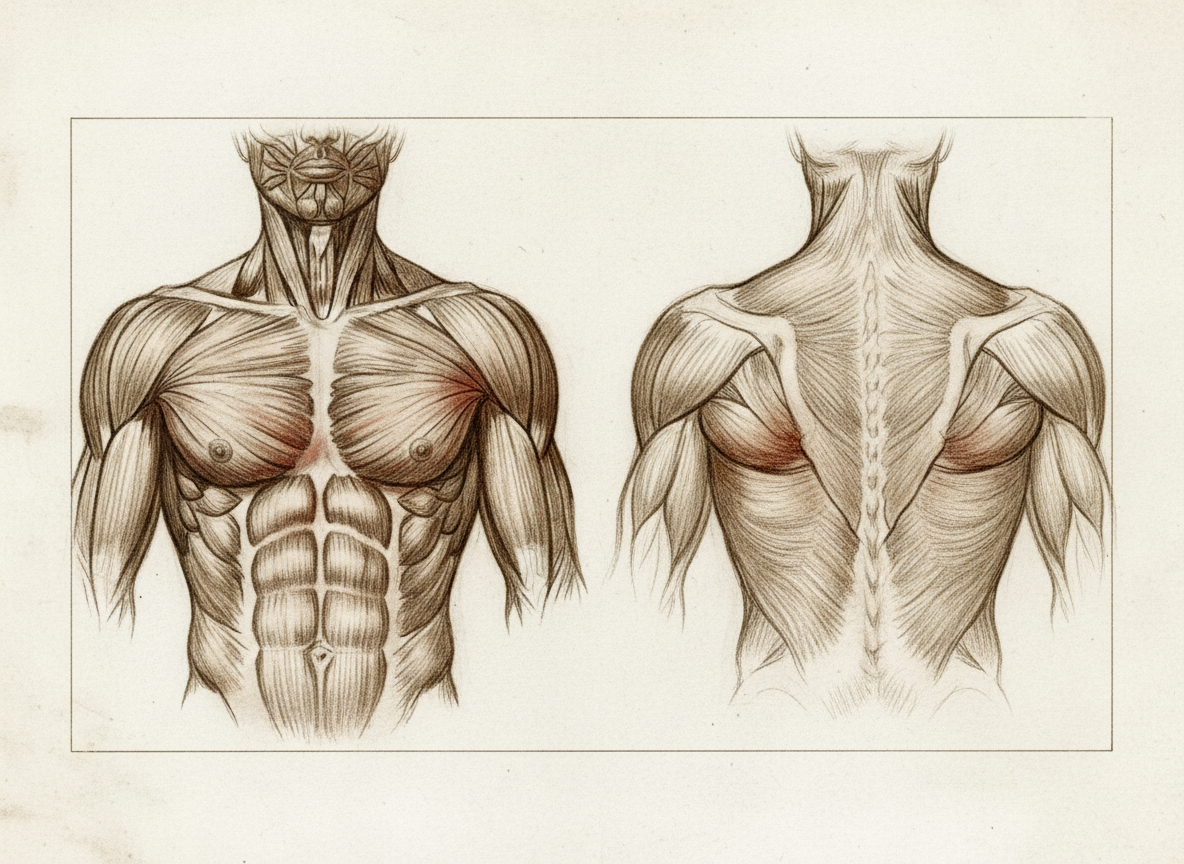
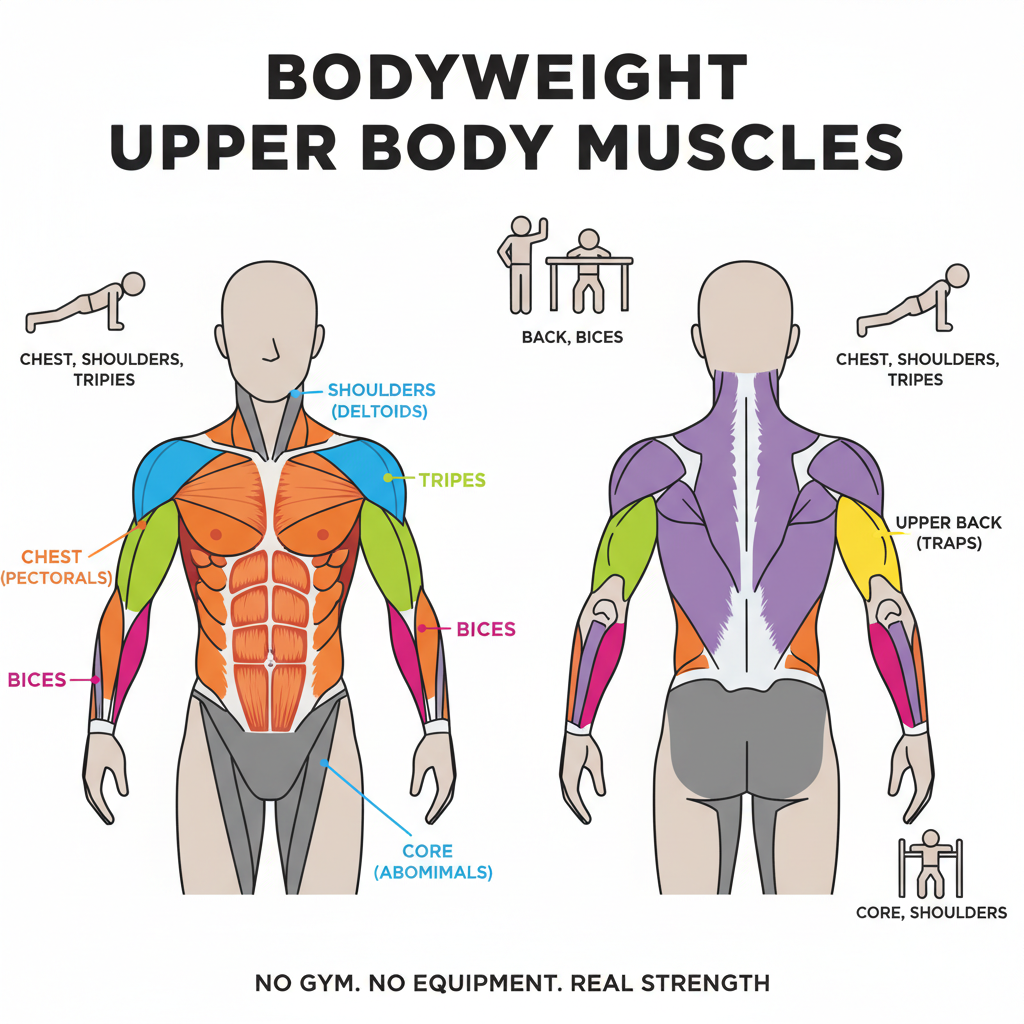
- Pectoralis Major & Minor: These are your chest muscles. They are the primary drivers in “pushing” movements like push-ups.
- Deltoids: Your shoulder muscles. They have three heads (front, side, and back) and are responsible for moving your arms in almost every direction.
- Triceps Brachii: Located on the back of your upper arm, these span from the shoulder to below the elbow. They are essential for extending the arm and provide that “toned” look many women desire.
- Biceps Brachii & Brachialis: These are the “pulling” muscles on the front of your arm. While harder to target without equipment, they are crucial for elbow flexion.
- Latissimus Dorsi & Rhomboids: These make up your back. Strong “lats” give you that sought-after V-taper, while rhomboids help pull your shoulder blades together, which is the secret to building upper body strength through easy home workouts that fix “desk posture.”
We always emphasize core engagement. In almost every bodyweight upper body move—especially planks and push-ups—your core must remain “online” to stabilize your spine. This means you’re getting an ab workout while you’re working on your arms!
Top Exercises for Arms, Chest, and Shoulders
Ready to get moving? You don’t need a rack of dumbbells to feel the burn. Here are our favorite moves to include in a bodyweight upper body strength training program.
- Push-up Variations: The gold standard. If standard push-ups are too tough, start with incline push-ups (hands on a table or sofa) or knee push-ups. For a challenge, try “Diamond” push-ups to target the triceps.
- Pike Press: Great for shoulder strength. Start in a downward dog position and lower your head toward the floor between your hands. This mimics an overhead press.
- Plank Taps: While in a high plank, tap your opposite shoulder with your hand. This builds incredible stability in the shoulders and core.
- Wall Angels: Stand with your back against a wall and move your arms up and down like you’re making a snow angel. This is a “humbling” move that improves shoulder mobility and scapular control.
- Supermans: Lie face down and lift your arms and legs. This targets the posterior chain (back muscles) often neglected in home routines.
- Inverted Rows: Find a sturdy table, lie underneath it, grab the edge, and pull your chest toward the table. This is the best way to hit your back and biceps without a pull-up bar.
Exercise Progression Table
| Exercise | Beginner Regression | Advanced Progression |
|---|---|---|
| Push-up | Incline (Hands on wall/table) | Decline (Feet on chair) |
| Tricep Dip | Feet flat, knees bent | Feet elevated on another chair |
| Shoulder Work | Wall Angels | Handstand Push-ups (against wall) |
| Back Work | Bird-Dog holds | Pull-ups or Chin-ups |
If you are just starting out, we recommend checking out our beginners upper body strength workout for a step-by-step guide. For those who want a more general approach, our at home workout for upper body covers the essentials perfectly.
Structuring Your Routine for Optimal Results
Consistency beats intensity every single time. To see real changes in your strength and muscle tone, you need a plan. We recommend training your upper body 2 to 4 times per week, ensuring you have at least 48 hours of rest between sessions targeting the same muscles.
A vital component of success is the mind-muscle connection. Don’t just go through the motions. When you do a tricep dip, actively think about the back of your arm contracting. Research shows that “internal cueing”—focusing on the muscle being worked—can increase muscle fiber recruitment.
For a well-rounded approach, you might want to integrate these moves into a full body home workout plan or explore specific bodyweight exercises for home to keep things fresh.
Designing a Bodyweight Upper Body Strength Training Circuit
Circuit training is our favorite way to train because it keeps the heart rate up while building muscle. A “Giant Set” is a great technique where you perform 4 or more exercises back-to-back with minimal rest.
Sample Circuit:
- Pike Press: 10-12 reps
- Standard Push-ups: 10-15 reps
- Inverted Rows (Table): 8-10 reps
- Tricep Dips: 12 reps
- Plank Taps: 30 seconds
- Rest 60-90 seconds and repeat for 3-4 rounds.
This structure ensures you hit every major muscle group in a short window. If you’re looking for something tailored for those just starting, our beginner friendly home workout plan is a fantastic resource.
Advanced Bodyweight Upper Body Strength Training Progressions
Once you can easily smash out 20 push-ups, you need to make things harder to keep seeing results. This is called Progressive Overload.
- Tempo Control: Slow down! Try taking 3 seconds to lower yourself in a push-up and 1 second to explode up. This increases “Time Under Tension.”
- Leverage Changes: Move your feet higher (decline push-ups) to put more weight into your upper body.
- Unilateral Training: Try “Archer Push-ups” where one arm does more work than the other. This identifies and fixes strength imbalances.
- Explosive Movements: Try clapping push-ups. These build “power,” which is the ability to exert force quickly.
Explore more no equipment home exercises to see how far you can push your limits.
Maximizing Muscle Growth and Overcoming Limitations
Can you get “ripped” or build significant muscle with just your body weight? The answer is a resounding yes, but you have to be smart about it. The biggest challenge in bodyweight upper body strength training is the “pulling” movements (back and biceps). Without a bar, it’s harder to create resistance. This is where you have to get creative with household items.
A sturdy table for rows or a towel wrapped around a door handle for “towel rows” can bridge the gap. Nutrition and recovery are just as important as the workout itself. To build muscle, you need adequate protein (aim for roughly 1 gram per pound of body weight) and enough sleep to let your tissues repair.
If your goal is fat loss alongside strength, check out our strength training for weight loss a beginners guide. It explains how building muscle turns your body into a calorie-burning machine. For those days when you have zero energy, even an easy home workout without equipment is better than doing nothing!
Frequently Asked Questions about Bodyweight Training
Can I build significant muscle mass without weights?
Yes! While you might not become a professional bodybuilder, you can certainly build a strong, athletic, and “toned” physique. The key is progressive resistance—making the exercises harder as you get stronger—and maintaining a high volume of sets and reps to trigger hypertrophy.
How often should I perform an upper body workout?
For most women, 2 to 3 sessions per week is the “sweet spot.” This allows for optimal muscle repair. Avoid training the same muscle group every single day, as muscles actually grow while you are resting, not while you are working out!
What household items can I use to enhance my workout?
- Chairs: Perfect for tricep dips or incline/decline push-ups.
- Towels: Use them on smooth floors for “body saws” or “mountain climbers.”
- Water Jugs: If you really need a little extra weight, a gallon of water weighs about 8 pounds!
- Door Frames: Great for static holds or “doorway chest stretches.”
Conclusion
At Casa e Jardim Web, we believe that fitness should be accessible to everyone, regardless of whether they have a gym membership. Mastery of your own bodyweight is the foundation of all strength. By focusing on proper form, embracing the “burn” of high-rep sets, and consistently challenging yourself with new progressions, you can achieve the upper body strength you’ve always wanted.
Sustainable fitness is about finding a routine you actually enjoy and can stick to in the long run. Start with the basics, listen to your body, and don’t be afraid to get creative with your home environment. Ready to dive deeper into your fitness journey? Check out more info about our strength training services and let’s get stronger together!
