
Why Simple Upper Body Exercises Beginners Should Start Today
Simple upper body exercises beginners can do at home are one of the fastest ways to build real strength without a gym membership or expensive equipment.
Here are the best simple upper body exercises for beginners to get started:
- Modified Push-Ups – chest, triceps, core
- Dumbbell Rows – back, biceps, posture
- Overhead Shoulder Press – deltoids, trapezius
- Bicep Curls – arm strength and definition
- Tricep Dips – triceps using a chair or bench
- Resistance Band Pull-Aparts – rear deltoids, upper back
- Dumbbell Chest Press – pectorals, triceps
- Lateral Raises – side deltoids, shoulder width
- Plank Taps – shoulders, core stability
- Bird Dog – lower back, balance, coordination
Most beginners can see meaningful progress with just 2 to 3 sessions per week, each lasting 20 to 40 minutes. You don’t need to lift heavy or spend hours training. Consistency and good form matter far more than intensity when you’re starting out.
Upper body strength isn’t just about looking fit. It helps you carry groceries, sit up straighter, and protect your joints as you age. Research shows strength training also supports bone density, metabolism, and long-term health.
The good news? You need very little to get started – a pair of dumbbells, a resistance band, and a mat will cover almost everything.
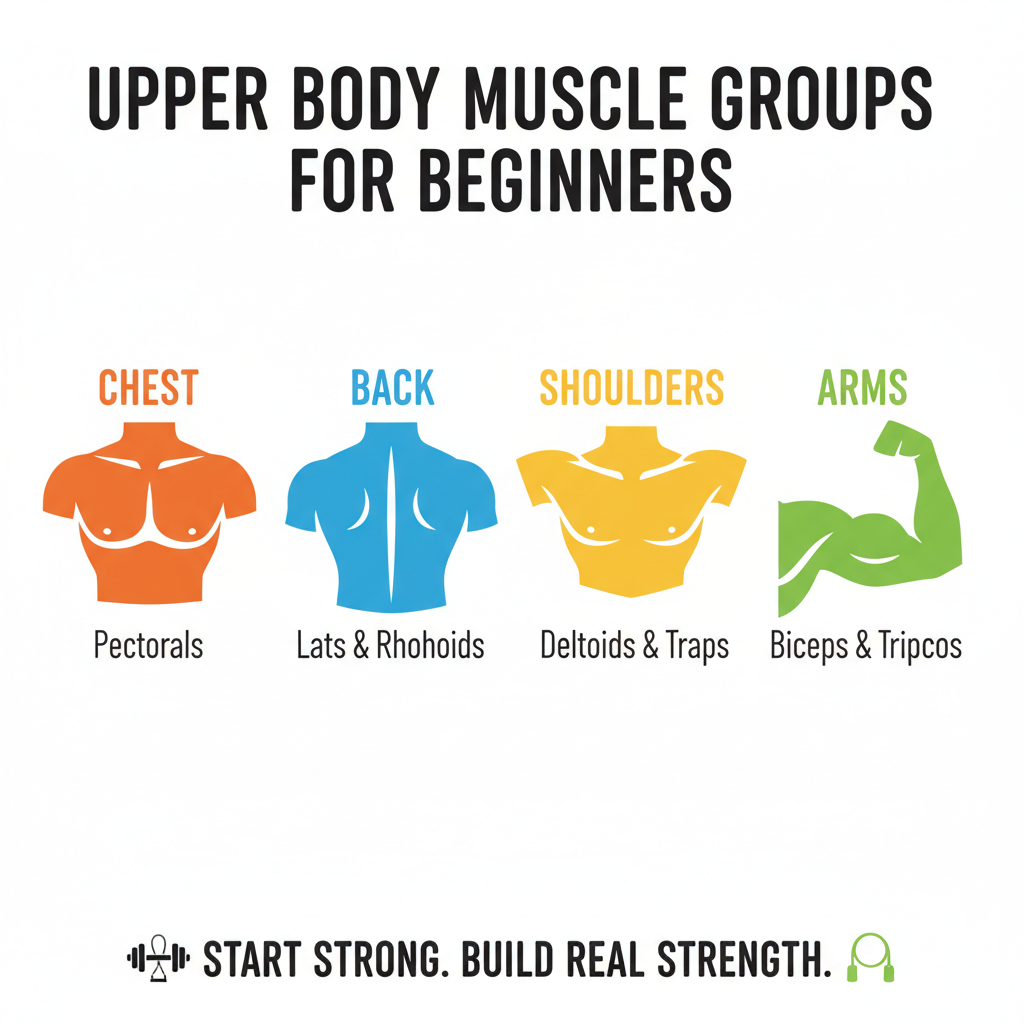
Preparation and Benefits of Upper Body Training
When we think about fitness, it’s easy to focus on cardio like running or cycling. While those are great for the heart, building muscle mass through resistance training is a game-changer for our metabolism. Muscle tissue is more metabolically active than fat, meaning the more we have, the more calories our bodies burn even while we’re binge-watching our favorite shows.
For us beginners, starting with simple upper body exercises beginners love isn’t just about “toning” arms. It’s about daily functionality. Think about how many times a day you reach for a high shelf, carry a heavy laundry basket, or push open a heavy door. Strength training makes these tasks feel effortless. Furthermore, the CDC guidelines suggest that adults should engage in muscle-strengthening activities at least twice a week to maintain optimal health.
Why Simple Upper Body Exercises Beginners Benefit from Strength Training
The benefits of strength training go deep—literally to the bone. As we age, our bone density naturally begins to decline. Resistance training puts healthy stress on our bones, which signals the body to deposit more minerals, effectively helping in osteoporosis prevention.
Beyond the physical, there is a massive psychological win. There’s nothing quite like the confidence building that happens when you realize a weight that felt heavy two weeks ago now feels light. You start to feel more capable in your own skin. If you’re looking for a structured way to dive in, check out our guide on Building Upper Body Strength: Easy Home Workouts to see how you can transform your living room into a personal fitness hub.
Essential Equipment and Warm-Up Routine
One of the biggest myths we hear is that you need a garage full of iron to get strong. In reality, you only need a few basics:
- Dumbbells: A light set (5–8 lbs) and a medium set (10–15 lbs) are perfect for starting.
- Resistance bands: These are fantastic for “pulling” movements and are easy to store.
- Exercise mat: This provides grip and cushioning for floor-based moves.
Before we jump into the heavy lifting, we must prepare the engine. An 8-12 minute warm-up is non-negotiable. According to ACE research on warm-up benefits, a proper warm-up increases blood flow to the muscles and improves joint range of motion, significantly reducing injury risk.
Start with light cardio like marching in place or jumping jacks for 3-5 minutes. Follow this with dynamic stretches like arm circles (small and large), windmills, and torso rotations. This tells your nervous system, “Hey, we’re about to do some work!”
Top 10 Simple Upper Body Exercises Beginners Should Master
Now, let’s get to the fun part. When performing these simple upper body exercises beginners should focus on two things: form and a controlled tempo. Avoid the temptation to swing the weights. We want the muscles doing the work, not momentum! We have selected a mix of compound movements (which work multiple joints and muscles) and isolation exercises (which target one specific muscle) to give you a well-rounded physique.
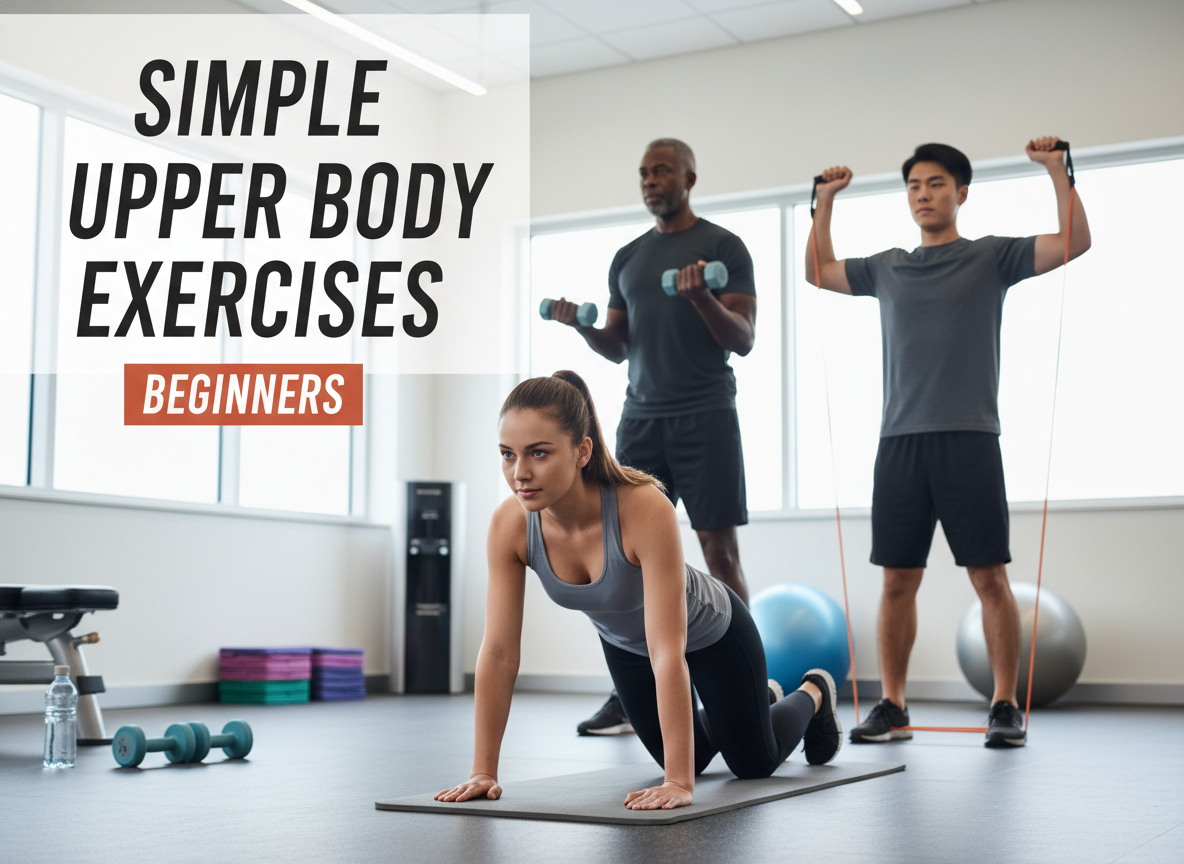
1. Modified Push-Ups
Push-ups are the gold standard for chest and triceps strength, but a full push-up can be daunting. We suggest starting with your knees on the mat. Keep your body in a straight line from your head to your knees. Lower your chest toward the floor, then push back up. This move also builds incredible core stability. For more ideas on working out without gear, see our list of No Equipment Home Exercises.
2. Dumbbell Rows
If you spend a lot of time at a desk, this is your new best friend. Rows target the back muscles and biceps, helping to pull your shoulders back and improve posture. Lean forward slightly with a flat back, holding a dumbbell in each hand. Pull the weights toward your hips, squeezing your shoulder blades together at the top. For a deeper dive into dumbbell basics, check out Dumbbells 101: Beginner-Friendly Home Strength Exercises.
3. Overhead Shoulder Press
This vertical pushing movement targets the deltoids (shoulders) and the trapezius (upper back). You can do these seated or standing. Hold the dumbbells at shoulder height with your palms facing forward. Press them straight up until your arms are extended, then slowly lower them back down. Keep your core tight so you don’t arch your back!
4. Bicep Curls
The classic! This isolation move targets the biceps brachii on the front of your arm. Hold dumbbells at your sides, palms facing forward. Curl the weights toward your shoulders while keeping your elbows glued to your ribs. The secret here is a controlled descent—don’t just let the weights drop.
5. Tricep Dips
You don’t even need weights for this. Use a sturdy chair or the edge of your couch. Sit on the edge, place your hands next to your hips, and slide your bottom off. Bend your elbows to lower your body, then push back up. Focus on elbow alignment; don’t let them flare out to the sides.
6. Resistance Band Pull-Aparts
This is a “micro-movement” with macro benefits. Hold a resistance band in front of you with both hands. Pull the band apart by moving your arms out to the sides, focusing on scapular retraction (pinching those shoulder blades!). This hits the rear deltoids and upper back, which are often neglected.
7. Dumbbell Chest Press
Lay flat on your back on your mat (or a bench if you have one). This targets the pectorals and triceps. Hold the dumbbells above your chest with arms straight. Lower them until your elbows lightly touch the floor, then press them back up. It’s like an upside-down push-up!
8. Lateral Raises
To get that nice shoulder width, we use lateral raises. Hold light dumbbells at your sides. With a slight bend in your elbows, raise your arms out to the sides until they are at shoulder height. Use light weights here; your shoulders are smaller muscles and don’t need much to feel the burn.
9. Plank Taps
Get into a high plank position (on your hands). While keeping your hips as still as possible, tap your left shoulder with your right hand, then switch. This bodyweight-only move is fantastic for shoulder stability and core strength.
10. Bird Dog
Finish your set with the Bird Dog. On all fours, extend your right arm forward and your left leg back simultaneously. This improves lower back strength, balance, and coordination. It’s the perfect way to tie the upper and lower body together.
Designing Your Routine: Sets, Reps, and Frequency
As a beginner, you don’t need to live in your workout gear. We recommend starting with 1 to 3 sets of 8 to 15 repetitions for each exercise. If you can easily do 15 reps with perfect form, it’s time to pick up a slightly heavier weight!
Aim for 20-40 minute sessions, 2-3 times per week. Most importantly, allow for 48-72 hours of recovery between sessions for the same muscle group. Your muscles don’t grow while you’re working out; they grow while you’re resting! For more tailored advice, our guide on Simple and Effective Strength Training for Women at Home offers great insights into balancing life and lifting.
Balancing Push and Pull Movements
To keep our joints healthy and our physique balanced, we need to ensure we aren’t just doing “mirror muscles” (the ones we see in the front). A common mistake is doing too many push exercises and neglecting the pull.
| Push Exercises | Pull Exercises |
|---|---|
| Modified Push-Ups | Dumbbell Rows |
| Overhead Shoulder Press | Resistance Band Pull-Aparts |
| Dumbbell Chest Press | Bird Dog (Stabilization) |
| Tricep Dips | Bicep Curls |
Safety, Form, and Progression
Safety is our number one priority. We always tell our readers: leave your ego at the door. Lifting a heavier weight with bad form is a fast track to an injury.
- Core engagement: Imagine someone is about to poke you in the stomach. That tightness is what you want during every lift.
- Neutral spine: Keep your back flat and your neck in line with your spine.
- Breathing technique: Exhale on the “hard” part of the move (the exertion) and inhale as you return to the start.
- Avoiding momentum: If you have to swing your body to get the weight up, the weight is too heavy.
How to Progress Your Simple Upper Body Exercises Beginners Routine
Once you’ve mastered the basics, you need to keep challenging your body. This is called progressive overload. You can do this by:
- Increasing resistance: Pick up heavier dumbbells.
- Adding repetitions: Go from 10 reps to 12.
- Slowing the tempo: Take 3 seconds to lower the weight. This increases “time under tension.”
- Adding sets: Move from 2 sets to 3.
For a long-term plan on how to keep those gains coming, check out our resource on Muscle Building Home Workouts for Beginners.
Frequently Asked Questions about Simple Upper Body Exercises Beginners
How often should I train my upper body?
For most beginners, 2 to 3 times per week is the “sweet spot.” This provides enough stimulus to grow stronger while allowing plenty of time for recovery.
Should I feel pain during these exercises?
There is a big difference between “muscle burn” and “joint pain.” You should feel your muscles working and perhaps a little tired, but you should never feel sharp, stabbing, or pinching pain. If you do, stop immediately and check your form or consult a professional.
Can I build strength without heavy weights?
Absolutely! Especially in the beginning, bodyweight exercises and resistance bands provide plenty of tension to build foundational strength. As you get stronger, you can use household items like water jugs or backpacks filled with books if you aren’t ready to buy dumbbells yet.
Conclusion
Starting a fitness journey can feel overwhelming, but it doesn’t have to be. By focusing on these simple upper body exercises beginners can master, you are laying the groundwork for a healthier, stronger, and more confident version of yourself. Remember to always finish your session with a cool down and some static stretching to help with muscle recovery and flexibility.
At Casa Jardim Web, we are dedicated to making fitness accessible to everyone, regardless of whether you have a gym membership or not. Take it one rep at a time, be patient with yourself, and celebrate every small victory.
Start your journey to a stronger you with our full range of strength guides and let’s get moving together!
