
You Don’t Need a Gym to Get Fit — Here’s How to Start Today
An at home full body workout for beginners is one of the smartest ways to kick off your fitness journey — no gym membership, no expensive equipment, and no experience required.
Here’s a quick overview of what a beginner at-home full body routine looks like:
| Element | Beginner Recommendation |
|---|---|
| Workout frequency | 2-3 times per week |
| Session length | 20-45 minutes |
| Rest between sessions | At least 48 hours |
| Sets per exercise | 2 sets |
| Reps per exercise | 10-15 reps |
| Equipment needed | None (bodyweight only) |
| Key exercises | Squats, push-ups, lunges, glute bridges, plank |
Starting a fitness routine can feel overwhelming. Most people assume they need a gym, a personal trainer, or a room full of equipment just to get going. They don’t.
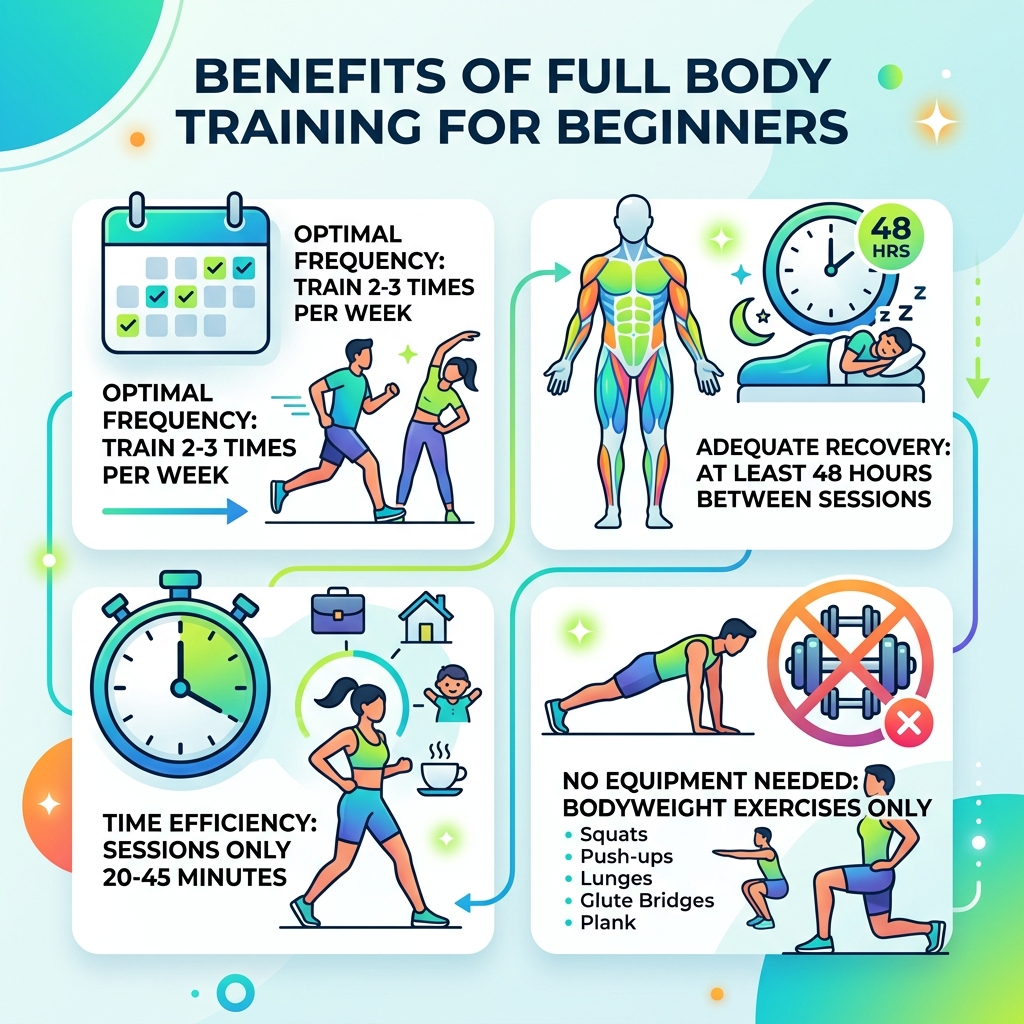
Research consistently shows that bodyweight exercises can build real strength, improve endurance, and help manage body fat — all from your living room floor. The American College of Sports Medicine recommends that beginners train their full body 2-3 times per week, with at least 48 hours of rest between sessions. That’s it.
The barrier to entry is low. The results are real. And the hardest part? Just starting.
This guide walks you through everything — from your first warm-up to your first signs of progress.
Why Full Body Training is Ideal for Beginners
When we talk about an at home full body workout for beginners, we are referring to a routine that hits every major muscle group—legs, back, chest, shoulders, arms, and core—in a single session. For someone just starting out, this is significantly more effective than “body part splits” (like having a dedicated “leg day”).
The primary reason is frequency. Scientific research on training frequency published in Sports Medicine indicates that training muscles more than once a week produces superior results for muscle growth and strength compared to once-a-week splits. By hitting every muscle 2-3 times a week, we give our bodies more opportunities to trigger growth and adaptation.
Furthermore, full body routines are incredibly time-efficient. Instead of spending six days a week at a gym, a well-designed beginner-friendly home workout plan allows us to see massive improvements in just three 30-minute sessions per week.
There’s also a metabolic secret weapon called EPOC (Excess Post-exercise Oxygen Consumption). Because full body movements engage so much muscle mass at once, our bodies require more energy to recover after the workout is over. This means we continue burning calories at a higher rate for hours after we’ve finished our last set of squats. It’s the “afterburn” effect that makes full body training a powerhouse for fat loss.
Key Benefits of At-Home Training
One of the biggest hurdles for beginners is “gymtimidation”—that feeling that everyone is watching you or that you don’t know how to use the machines. Training at home removes this psychological barrier entirely. You can grunt, sweat, and even fall over during a balance move without a single witness.
At-home training is also the ultimate cost-effective solution. You don’t need a $50 monthly membership when your body weight provides all the resistance you need. For many, a home-workout-for-women-beginners or a home-workout-for-men-beginners provides the privacy and convenience necessary to actually stay consistent.
Beyond aesthetics, strength training is essential for long-term health. The Mayo Clinic notes that regular resistance training helps protect our bones, increasing bone density and reducing the risk of osteoporosis as we age. It’s not just about looking good in a t-shirt; it’s about building a body that lasts.
Essential Equipment and Preparation
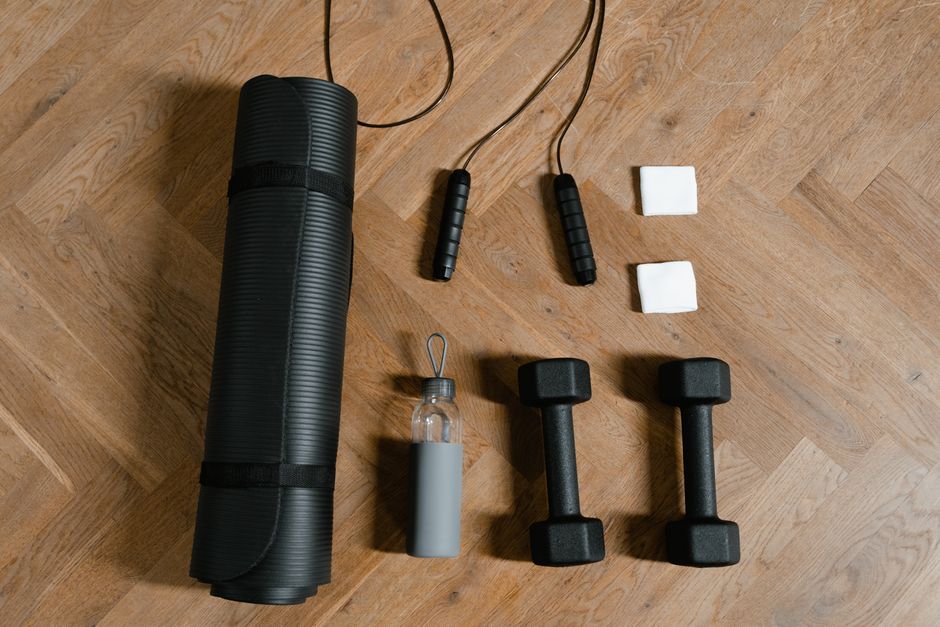
The beauty of an at home full body workout for beginners is that the “equipment” is already attached to you. Your body weight is a versatile tool that can be manipulated to create varying levels of difficulty. However, a few simple items can make your experience more comfortable and effective.
- A Yoga Mat: Essential for floor exercises like planks and glute bridges to protect your joints and provide grip.
- Sturdy Furniture: A kitchen chair or a couch can be used for “box squats” or incline push-ups.
- Hydration: Keep a water bottle nearby. Even a 20-minute session requires proper fluid replacement.
- Space: You only need enough room to lie down and extend your arms. A 6×6 foot area is usually plenty.
| Feature | Bodyweight Exercises | Dumbbell Exercises |
|---|---|---|
| Cost | $0 | $20 – $100+ |
| Space Needed | Minimal | Requires storage |
| Ease of Use | High (Natural movements) | Moderate (Requires form mastery) |
| Scalability | Adjusting angles/leverage | Adding more weight |
| Injury Risk | Generally lower | Higher if form is poor |
While we focus on bodyweight here, you can eventually progress to using household items like water jugs or backpacks filled with books if you want to add extra resistance.
How to Warm Up for an At Home Full Body Workout for Beginners
Never skip the warm-up. We like to think of the body like a car in winter—you need to let the engine idle for a few minutes before you hit the highway. A proper warm-up increases muscle temperature and blood circulation, which significantly reduces the risk of injury.
According to Scientific research on warm-up benefits, dynamic stretching (stretching while moving) is superior to static stretching (holding a pose) before a workout. Aim for 5-10 minutes of the following:
- Arm Circles: 30 seconds forward, 30 seconds backward to wake up the shoulders.
- Hip Circles: 1 minute to loosen the lower back and pelvis.
- Jumping Jacks: 1 minute to get the heart rate up.
- Bodyweight Squats (Slow): 10 reps to prime the legs.
- Cat-Cow Stretch: 1 minute to mobilize the spine.
The Ultimate At Home Full Body Workout for Beginners: 8 Essential Exercises
To see results, we need to focus on compound movements—exercises that use more than one joint and multiple muscle groups. This full-body-weight-training-routine-at-home is designed to build foundational strength and a strong mind-muscle connection.
Lower Body Fundamentals
Your legs contain the largest muscles in your body. Working them burns the most calories and releases the most growth-stimulating hormones.
- Chair Squats: Stand in front of a chair. Lower your hips until your butt lightly touches the seat, then stand back up. This ensures you are sitting “back” into your heels rather than forward into your knees.
- Stationary Lunges: Step one foot forward and drop your back knee toward the floor. Keep your torso upright. This is a fantastic lower-body-weight-training-plan-for-beginners because it improves balance and unilateral (one-sided) strength.
- Glute Bridges: Lie on your back with knees bent and feet flat. Lift your hips toward the ceiling, squeezing your glutes at the top. This targets the posterior chain (glutes and hamstrings) which is often weak in beginners who sit frequently.
Upper Body and Core Essentials
Building upper body strength isn’t just for “bulking up”—it’s for functional movements like carrying groceries or pushing open heavy doors.
- Incline Push-ups: If a standard push-up is too hard, place your hands on a kitchen counter or a sturdy sofa. This reduces the percentage of body weight you have to lift while still building chest and triceps strength. This is a staple in any beginners-upper-body-strength-workout.
- Bird-Dog: Get on all fours. Simultaneously extend your right arm forward and your left leg backward. Hold for 2 seconds. This is one of the safest and most effective ways to build core stability and protect the lower back.
- Forearm Plank: Hold a straight line from your head to your heels while resting on your forearms. Focus on “tucking” your tailbone to engage the deep core.
- Bicycle Crunches: Lie on your back and bring your opposite elbow to your opposite knee in a pedaling motion. This targets the obliques and the entire abdominal wall.
- Superman: Lie face down and lift your arms and legs off the floor simultaneously. This strengthens the lower back and improves posture.
Structuring Your Routine and Progression
How you put these exercises together matters just as much as the moves themselves. For a complete full-body-home-workout-plan, we recommend a circuit-style or set-style approach.
The Beginner Structure:
- Sets: 2 per exercise.
- Reps: 10–15 (or as many as you can do with perfect form).
- Rest: 60–90 seconds between sets.
- Frequency: 3 days per week (e.g., Monday, Wednesday, Friday).
To keep seeing results, you must apply progressive overload. This means making the workout slightly harder over time so your body doesn’t plateau. You can do this by adding one more rep each week, reducing your rest time by 10 seconds, or moving from incline push-ups to floor push-ups.
A great rule of thumb is the “Two-for-Two Rule”: if you can perform two additional repetitions over your target in the last set of an exercise for two consecutive workouts, it’s time to increase the difficulty. This is the cornerstone of our ultimate-guide-to-full-body-weight-training-at-home.
Frequency, Recovery, and Nutrition
Beginners often make the mistake of working out every single day. This is a recipe for burnout and injury. Muscles don’t grow while you’re working out; they grow while you’re resting. We recommend the 48-hour rule: always leave at least one full day of rest between full body sessions.
Nutrition is your fuel. To support muscle repair, aim for a balanced daily-workout-and-nutrition-guide-for-beginners. This includes:
- Protein: 0.7 to 1 gram of protein per pound of body weight (think chicken, beans, Greek yogurt, or tofu).
- Hydration: Aim for half your body weight in ounces of water daily.
- Sleep: 7-9 hours is where the real “magic” of recovery happens.
On your off days, stay active with “active recovery”—a light walk, some gentle stretching, or playing with your kids. This keeps the blood flowing without taxing the central nervous system.
Troubleshooting Your Progress and Form
Even the best at home full body workout for beginners can be undermined by common errors. We want to avoid the beginner-fitness-mistakes-to-avoid that lead to injury.
The biggest culprit is ego lifting. Even with body weight, people often try to move too fast or do too many reps, sacrificing form. If your back arches during a plank or your knees cave in during a squat, stop. Quality always beats quantity.
Another issue is inconsistency. It’s better to do a 15-minute workout three times a week than a 90-minute workout once every two weeks. Use these fitness-motivation-tips-for-beginners to stay on track:
- Set a specific time for your workout.
- Lay out your clothes the night before.
- Track your progress in a notebook—seeing the numbers go up is a huge dopamine hit!
Avoiding Common Pitfalls in Your At Home Full Body Workout for Beginners
- Overtraining: If you feel chronically tired or your joints hurt (not just muscle soreness), take an extra rest day.
- Improper Breathing: Never hold your breath. Exhale during the “hard” part of the move (the exertion) and inhale as you return to the start.
- Neutral Spine: Whether you are squatting or doing push-ups, keep your neck in line with your spine. Don’t look up at the TV or down at your feet.
- Skipping the Warm-Up: As discussed, this is non-negotiable for joint health.
Frequently Asked Questions about At-Home Workouts
How long does a beginner at-home workout take?
A typical session should take between 30 and 45 minutes. This includes a 5-minute warm-up, 20-30 minutes of resistance training, and a 5-minute cool-down. If you are short on time, even a 20-minute circuit can be effective if the intensity is high enough.
Can I lose weight with just bodyweight exercises?
Absolutely. Weight loss is primarily driven by a calorie deficit, but strength training ensures that the weight you lose comes from fat, not muscle. By building more muscle mass, you also increase your resting metabolic rate, meaning you burn more calories even while sitting on the couch.
Should I do cardio on the same day?
You can, but for beginners, we recommend doing cardio on your “off” days to avoid overexertion. If you must do it on the same day, perform your full body strength routine first while your energy levels are highest, then follow it with 15-20 minutes of low-intensity cardio like walking or cycling.
Conclusion
At Casa e Jardim Web, we believe that fitness should be accessible to everyone, regardless of their access to a gym. Mastering the at home full body workout for beginners is about more than just physical changes; it’s about proving to yourself that you have the discipline and the power to take control of your health.
Focus on the foundational movements, prioritize your form, and stay consistent. Your future self will thank you for the strength, mobility, and confidence you are building today.
Ready to take the next step? Start your journey today and explore our other guides to keep your progress moving forward!
