
The Fastest Way to Get a Real Workout Done at Home
A 20 minute HIIT workout delivers a full-body sweat session in the time it takes to watch two episodes of a sitcom. No gym. No commute. Just results.
Here’s what you need to know right away:
- What it is: HIIT (High-Intensity Interval Training) alternates short bursts of hard effort with brief rest periods
- How long: 5 min warm-up + ~12 min of intense intervals + 5 min cool-down
- Calorie burn: roughly 150–400 calories per session, depending on your effort and body weight
- Best interval: 40 seconds of work / 20 seconds of rest is a great starting point
- How often: 2–3 times per week, with at least 48 hours between sessions
- Equipment needed: none — bodyweight is enough to get started
The beauty of HIIT is simple. Because the effort is so high, the workout has to be short. If you can keep going comfortably for 45 minutes, you’re probably not pushing hard enough.
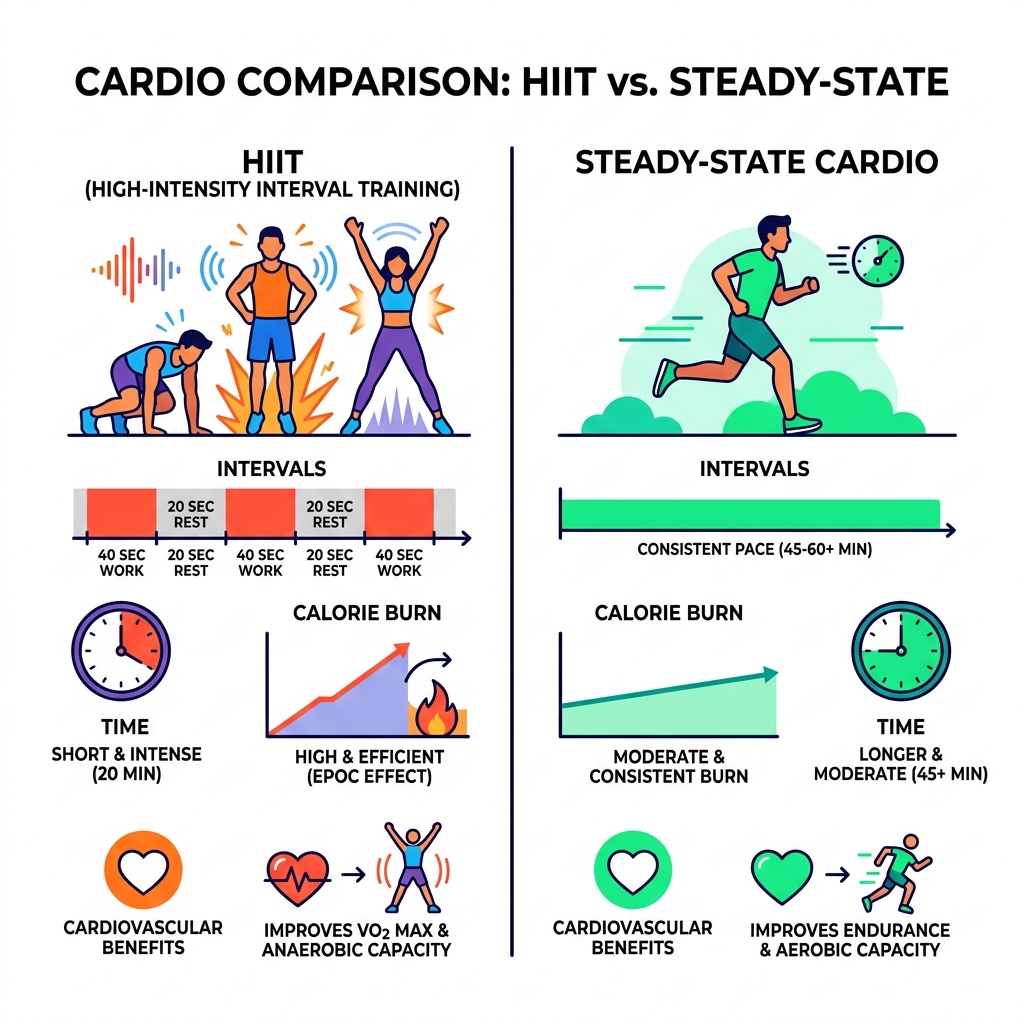
Research backs this up. Studies show that 15–20 minutes of HIIT can improve cardiovascular health just as effectively as a long jog — in a fraction of the time. And because HIIT pushes your body into anaerobic energy production, you keep burning calories after the workout ends.
Whether you’re a complete beginner or a seasoned athlete, there’s a version of this workout that fits your level. This guide walks you through exactly how to do it.
The Science and Benefits of the 20 Minute HIIT Workout
Why does a 20 minute HIIT workout feel like you’ve run a marathon in a fraction of the time? The answer lies in how our bodies produce energy. Most traditional cardio, like a long walk or a steady jog, is “aerobic,” meaning it relies on oxygen. HIIT, however, pushes us into the “anaerobic” zone. This is the point where your body can’t deliver oxygen fast enough to your muscles, so it starts burning stored energy (glycogen) without it.
This process creates a physiological phenomenon known as Excess Post-exercise Oxygen Consumption, or EPOC. In simpler terms, it’s the “afterburn effect.” Because you’ve pushed your body so hard, it has to work overtime for hours after you’ve showered and changed just to return to its resting state. This means you’re burning extra calories while sitting on the couch!
Beyond the afterburn, HIIT is a powerhouse for hormonal health. High-intensity sessions have been shown to increase the production of Human Growth Hormone (HGH) by up to 450% during the 24 hours after a workout. HGH is responsible for increasing caloric burn and slowing down the aging process. Not bad for twenty minutes of work, right?
From a heart health perspective, scientific research on HIIT and cardiovascular health suggests that these short bursts of intensity improve oxygen efficiency and heart strength just as much as—if not more than—long-duration, moderate-intensity exercise. If your goal is weight management, combining these intervals with a solid plan like Indoor High-Intensity Interval Training for Weight Loss can lead to significant changes in body composition over time.
How to Structure Your Routine for Success
To get the most out of your 20 minute HIIT workout, you can’t just wing it. A structured approach ensures you hit the right intensity levels without burning out in the first three minutes. We recommend a “sandwich” approach: a warm-up and cool-down acting as the bread, with a high-intensity filling in the middle.
| Level | Work Interval | Rest Interval | Rounds |
|---|---|---|---|
| Beginner | 30 Seconds | 30 Seconds | 3 Rounds |
| Intermediate | 40 Seconds | 20 Seconds | 3-4 Rounds |
| Advanced | 50 Seconds | 10 Seconds | 4 Rounds |
A typical session breaks down like this:
- Warm-up (5 Minutes): Prepare your joints and get the blood flowing.
- The HIIT Circuit (12 Minutes): This is where the magic happens.
- Cool-down (3 Minutes): Lower your heart rate safely and stretch out those hard-working muscles.
For a deeper dive into how this looks in practice, check out our 20 Minute Fat Burning Workout at Home guide.
Structuring Your 20 Minute HIIT Workout for Maximum Impact
The gold standard for a 20 minute HIIT workout is the 40/20 split: 40 seconds of all-out work followed by 20 seconds of rest. This rest period is vital. It’s not just a time to check your phone; it’s a period for your heart rate to drop slightly so you can explode into the next interval with 100% effort.
Another popular method is the “Tabata” style. Traditionally, Tabata involves 20 seconds of work and 10 seconds of rest. In a 20-minute session, we often use “Tabata Supersets,” where you alternate between two different exercises (Exercise A and Exercise B) in an A-B-A-B pattern. This keeps the mind engaged and prevents any single muscle group from fatiguing too early. If you are squeezed for time on other days, you can adapt these principles into a Quick Daily Workout at Home.
Sample Exercises for Your 20 Minute HIIT Workout
You don’t need fancy machines to get your heart racing. Here are some of our favorite bodyweight moves that offer the biggest “bang for your buck”:
- Burpees: The ultimate full-body move. It works your chest, arms, quads, and glutes while sending your heart rate through the roof.
- Jumping Jacks: A classic for a reason. They are great for maintaining a steady high heart rate.
- Mountain Climbers: Fantastic for core stability and cardiovascular endurance.
- Goblet Squats: If you have a kettlebell or a heavy water bottle, these are perfect for building lower body strength.
- Plank Jacks: A core-shredding move that adds a cardio element to the traditional plank.
- Star Jumps: An explosive version of the jumping jack that requires maximum power.
Mixing these into a circuit is one of the most Effective Home Cardio Routines you can perform without leaving your living room.
Modifications and Progression Strategies
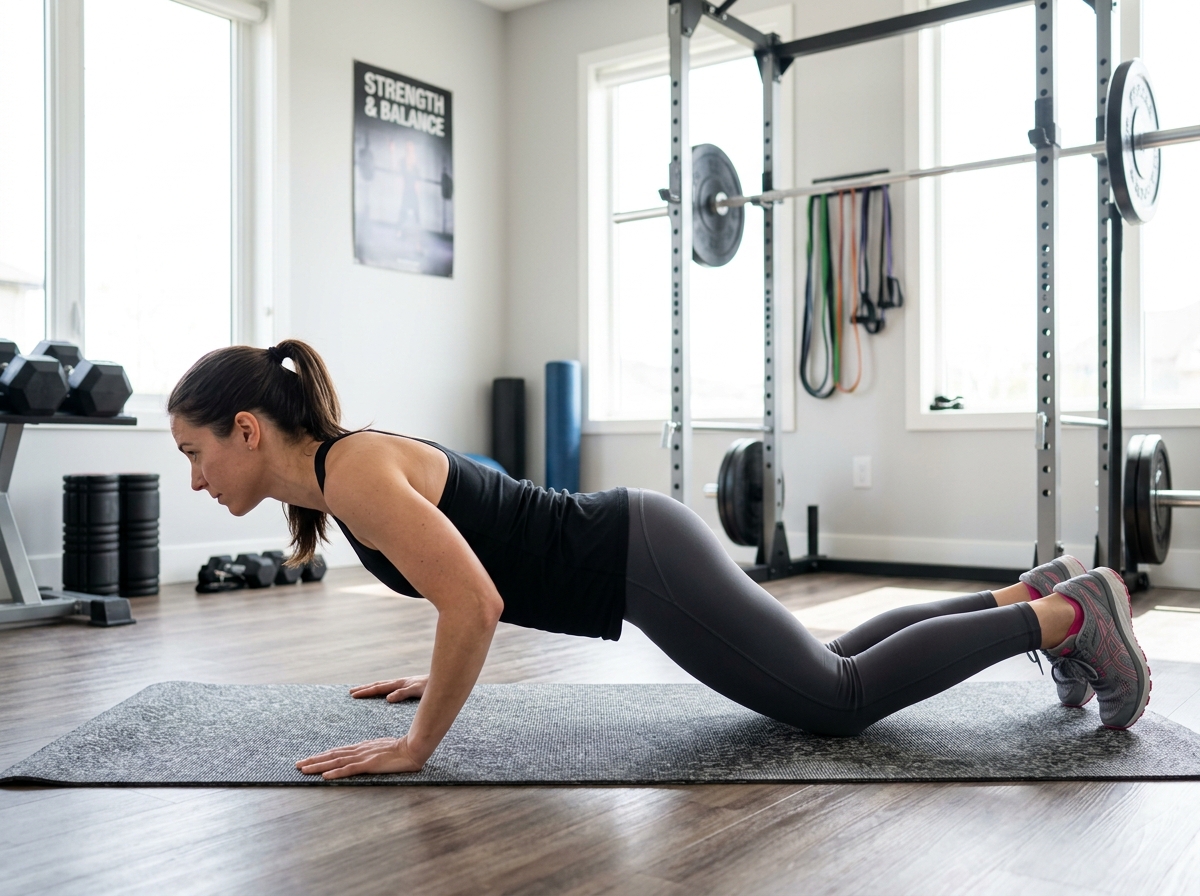
One of the biggest myths about HIIT is that it’s only for elite athletes. At Casa Jardim Web, we believe fitness should be accessible to everyone. If a “star jump” feels like a “star-trek” too far right now, modify it!
- For Beginners: Use a 30/30 ratio (30 seconds work, 30 seconds rest). Instead of jumping lunges, do steady reverse lunges. Instead of full burpees, try “half-burpees” where you step back rather than jump.
- For Advanced Athletes: Once a 40/20 split feels easy, move to 50/10. You can also add resistance with a weighted vest or dumbbells.
The most important rule is form over speed. It is better to do 10 perfect squats than 20 sloppy ones that hurt your knees. Keeping your core engaged and landing lightly on your feet during jumps will protect your joints and ensure you’re actually working the target muscles. For more intense variations, see our Intensive Cardio Workouts at Home page.
Scientific research on HIIT progression suggests that gradually decreasing rest time is one of the most effective ways to improve metabolic health and insulin sensitivity. Listen to your body; if you feel a sharp pain, stop. If you just feel “the burn,” keep going!
Safety, Recovery, and Frequency
Because a 20 minute HIIT workout is so taxing on the central nervous system and muscles, you cannot—and should not—do it every day. Your muscles don’t actually grow during the workout; they grow while you sleep and rest.
We recommend doing HIIT 2 to 3 times per week. You should leave at least 48 hours between sessions to allow for full recovery. On your “off” days, consider light movement like walking or yoga.
Safety tips to keep in mind:
- Core Engagement: Keep your belly button pulled toward your spine to protect your lower back.
- Landing Lightly: When jumping, try to land like a cat—silently. This absorbs the impact through your muscles rather than your joints.
- Hydration: You will sweat. A lot. Make sure you follow our Hydration Tips for Home Workouts to stay performing at your peak.
Before you start, ensure you’ve checked out our Pre-Workout and Post-Workout Tips to fuel your body correctly for the intensity ahead.
Frequently Asked Questions about HIIT
HIIT can be intimidating, but it doesn’t have to be. Here are the answers to the questions we hear most often from our community. For more advice tailored to a hectic lifestyle, browse our Effective Cardio Workouts for Busy Individuals.
How many calories can I burn in 20 minutes?
Most people can expect to burn between 150 and 400 calories in a 20-minute session. The exact number depends on your current weight, your gender, and, most importantly, your intensity. If you are truly working at a “9 out of 10” effort level, you will be at the higher end of that scale. The “afterburn” means you’ll continue to burn calories at an elevated rate for several hours afterward. It’s a very efficient way to manage weight, as noted in our Fitness Tips for Busy People.
How long does it take to see results?
Patience is key, but the good news is that HIIT works fast. Most people will feel an increase in their “gas tank” (endurance) and see improved muscle tone within 4 to 6 weeks. However, for significant changes in body composition—like losing noticeable body fat and building muscle mass—it usually takes about 12 weeks of consistent effort. Consistency is the secret sauce for any Home Workout for Weight Loss.
Can I do HIIT every day?
We strongly advise against daily HIIT. Doing high-intensity intervals every day can lead to overtraining, which actually stalls your progress. It can also spike your cortisol (stress hormone) levels, which can lead to your body holding onto fat rather than burning it. Recovery is just as important as the work itself! If you find yourself struggling to stay on track, our Home Exercise Motivation Tips can help you find the right balance.
Conclusion
At Casa Jardim Web, our mission is to make fitness a seamless part of your life. A 20 minute HIIT workout is the ultimate tool for the modern, busy individual. It requires no gym membership and no fancy equipment—just your own determination and a small bit of floor space.
Beyond the physical benefits of fat loss and muscle tone, the mental clarity and endorphin high you feel after a tough session are unmatched. There is a profound sense of accomplishment that comes from pushing your limits for twenty minutes.
Ready to start your journey? Whether you are looking for a quick sweat or a long-term transformation, we have the resources to help you succeed. Explore more info about home workouts on our site and let’s get moving together!
