
Your Body Is Enough: What Bodyweight Resistance Training Can Do for You
Bodyweight resistance training is one of the most effective — and underrated — ways to build real strength, muscle, and endurance without a single piece of equipment.
Here is a quick snapshot of what it is and why it works:
| Question | Quick Answer |
|---|---|
| What is it? | Using your own body weight as resistance to build muscle and strength |
| Does it build muscle? | Yes — research confirms similar muscle growth to traditional weight training |
| Who is it for? | Everyone, from complete beginners to advanced athletes |
| Equipment needed? | None — just your body and enough floor space to lie down |
| How often? | 3-4 full-body sessions per week, with 48 hours rest between sessions |
| Best exercises? | Push-ups, squats, lunges, planks, glute bridges, dips |
Gym memberships are expensive. Schedules are packed. Equipment takes up space. And yet the goal — getting stronger, leaner, and fitter — stays the same.
That is exactly where bodyweight training (also called calisthenics) fills the gap. You can do it in your living room, a hotel room, a park, or anywhere else you happen to be.
The best part? The science backs it up. Studies show that bodyweight exercises can produce comparable muscle growth and strength gains to traditional weight training — as long as you train with enough volume and push your muscles to work hard.
This guide walks you through everything: the exercises, the programs, the progressions, and the strategies that make bodyweight training genuinely effective — for any fitness level.
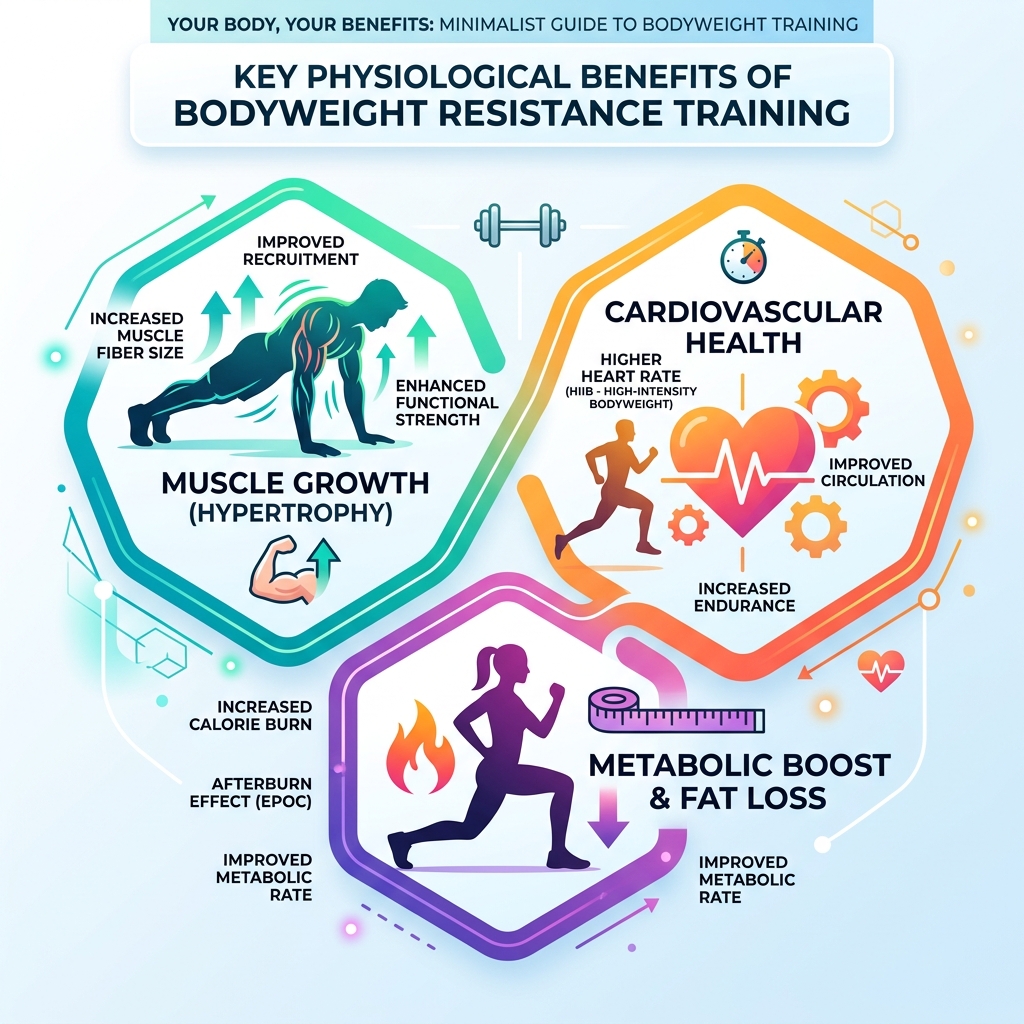
The Science of Bodyweight Resistance Training: Can You Really Build Muscle?
One of the biggest myths in the fitness world is that you need heavy iron plates to get “big” or strong. We are here to tell you that your muscles don’t have eyes—they don’t know if you are lifting a 50-pound dumbbell or pushing your own 180-pound frame off the floor. They only respond to tension, fatigue, and the need to adapt.
Scientific research, including a landmark 2016 study published in Physiology and Behavior, has shown that bodyweight resistance training can build muscle mass independent of external loads. In fact, research comparing low-load bench presses to standard push-ups found similar gains in muscle hypertrophy (growth) and strength. When we perform a push-up, we are effectively bench pressing a significant percentage of our body weight.
To trigger muscle growth, we need to focus on three things:
- Mechanical Tension: Stretching and contracting the muscle under load.
- Metabolic Stress: That “burn” you feel when doing high repetitions.
- Progressive Overload: Making the workout harder over time so your body doesn’t get bored.
With weights, you just add a plate. With bodyweight, we get creative. We increase the “time under tension” by slowing down our movements, or we change the leverage to make the exercise harder (like putting your feet on a chair for push-ups). If you are looking for a structured way to start, our full-body-weight-training-routine-at-home provides a perfect scientific foundation for these principles.
Essential Exercises for a Complete Full-Body Routine
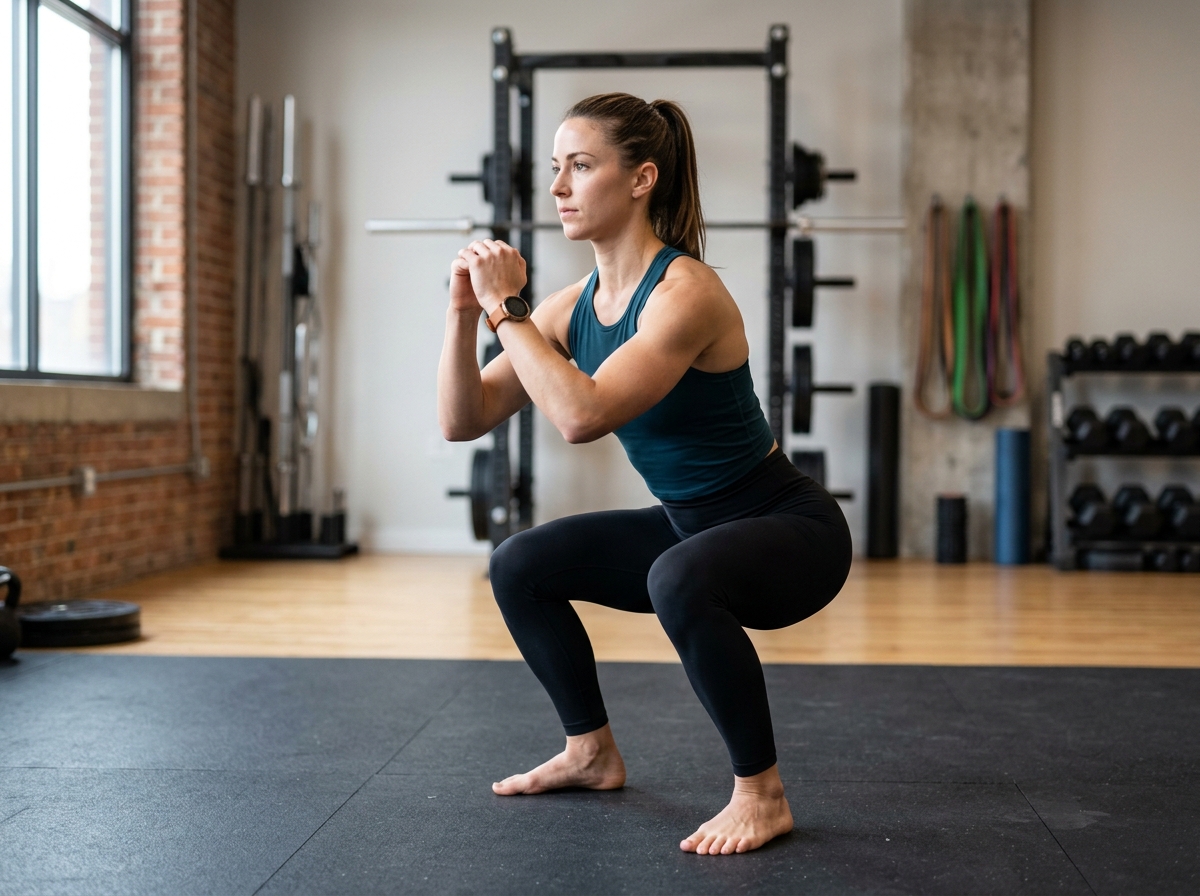
When we design a routine, we focus on compound movements. These are exercises that use multiple joints and muscle groups at once. Think of them as the “biggest bang for your buck” moves. Instead of doing an isolated bicep curl, we do a pull-up that hits the back, shoulders, and arms all at once.
For those just starting, we recommend checking out our guide on bodyweight-exercises-for-home to see how these fit into a daily schedule. If you are worried about space or lack of gear, our no-equipment-home-exercises list ensures you can train in a space no larger than a yoga mat.
Upper Body Bodyweight Resistance Training Moves
The upper body is often where people think they’ll hit a plateau first, but the variety available is staggering. We like to categorize these into “pushes” and “pulls.”
- Push-ups: The king of upper body moves. It targets the chest, triceps, and shoulders. You can start with wall push-ups, move to knee push-ups, and eventually tackle “diamond” push-ups to torch your triceps.
- Tricep Dips: Using a sturdy chair or a low table, these focus on the back of the arms.
- Pull-ups and Inverted Rows: These are essential for a healthy back. If you don’t have a pull-up bar, you can perform rows using a sturdy table or even a knotted bedsheet wedged into a doorframe.
- Plank Up-and-Downs: Moving from a forearm plank to a hand plank and back. This builds incredible shoulder stability.
For those who are just beginning their strength journey, we have a dedicated resource on muscle-building-home-workouts-for-beginners that breaks these down into manageable steps.
Lower Body and Core Bodyweight Resistance Training
Your legs contain the largest muscles in your body. Training them not only builds strength but also boosts your metabolism significantly.
- Squats: Keep your chest up and sit back like you’re aiming for an invisible chair. Ensure your knees stay aligned with your toes.
- Walking Lunges: These improve balance and target the glutes and quads.
- Glute Bridges: Lie on your back and lift your hips toward the ceiling. This is fantastic for undoing the damage of sitting at a desk all day.
- Wall Sits: An isometric hold that builds mental toughness and quad endurance.
- Mountain Climbers: Great for the core and getting the heart rate up.
- Bicycle Crunches: One of the most effective moves for the obliques and lower abs.
To see how these moves contribute to a leaner physique, take a look at our home-workout-for-muscle-toning guide.
Designing Your Program: From Beginner to Advanced
We believe that a plan is only as good as its consistency. For most people, a full-body routine performed 3 times per week is the gold standard. This allows for a day of rest between sessions, which is crucial because muscle isn’t built during the workout—it’s built while you sleep and recover.
A popular and effective way to structure this is through circuit training. Instead of doing all your squats, then all your push-ups, you do one set of each exercise back-to-back with minimal rest. This keeps your heart rate high, turning your strength session into a cardiovascular workout too.
A sample beginner circuit might look like this:
- 15 Squats
- 10 Push-ups
- 15 Walking Lunges
- 10 Inverted Rows (or Superman “Y” extensions)
- 30-second Plank Rest 60-90 seconds and repeat 3 times.
For a deeper dive into scheduling, our ultimate-guide-to-full-body-weight-training-at-home offers a comprehensive roadmap.
Mastering Progressive Overload Without Weights
How do we keep getting stronger when our body weight stays the same? This is where “calisthenics magic” happens. We use several “levers” to increase difficulty:
- Tempo: Instead of rushing through reps, try taking 3 seconds to lower yourself and 1 second to explode up (this is often called a 3-0-1-0 tempo).
- Leverage: A regular push-up is harder than a knee push-up because you are moving a higher percentage of your mass. A one-legged squat (Pistol Squat) is exponentially harder than a regular squat because all the weight is on one limb.
- Rest Intervals: Shortening your rest from 60 seconds to 30 seconds forces your muscles to recover faster, increasing metabolic demand.
- Volume: Simply adding more reps or more sets over time.
For more tips on making these adjustments, check out our easy-home-workout-without-equipment page.
Maximizing Results: Warm-ups, Recovery, and Fat Loss
We cannot stress this enough: Never skip the warm-up. A good warm-up should be “dynamic.” This means moving while you stretch. Think arm circles, leg swings, and marching in place. This increases blood flow and prepares your joints for the work ahead.
On the flip side, recovery is where the magic happens. We recommend at least 48 hours of rest between intense sessions for the same muscle groups. If you worked your whole body on Monday, wait until Wednesday to go again. In between, stay active with “active recovery” like walking or light stretching.
Is bodyweight resistance training good for weight loss? Absolutely. High-intensity circuit training using body weight provides maximum results with minimal investment. Research published in ACSM’s Health & Fitness Journal shows that high-intensity interval bodyweight training (HIBWT) can improve insulin resistance and reduce inflammation, which are key components of long-term fat loss. However, nutrition is a huge piece of the puzzle—roughly 80% of your body composition results will come from what you eat.
To help you balance the two, we’ve created a full-body-home-workout-plan that integrates these concepts perfectly.
Frequently Asked Questions about Bodyweight Training
How often should I do bodyweight training for best results?
For most of us, 3 to 4 times a week is the “sweet spot.” This frequency provides enough stimulus to trigger muscle protein synthesis (the process of building muscle) while allowing for adequate recovery. You can also sprinkle in “exercise snacks”—short 5-minute bursts of movement like squats or planks—throughout your workday to break up sedentary time.
Is bodyweight training effective for weight loss and fat loss?
Yes! Because these exercises often involve large, compound movements, they burn a significant amount of calories. When performed in a circuit or HIIT style, they keep your metabolic rate elevated even after the workout is over. Combined with a caloric deficit, bodyweight training helps you retain muscle while losing fat, leading to a “toned” appearance rather than just being “smaller.”
Can I build significant strength with bodyweight exercises alone?
You certainly can. While there is a limit to how much raw mass you can build compared to a professional bodybuilder using 500-pound weights, the functional strength you gain is immense. Advanced moves like pistol squats, handstand push-ups, and one-arm rows require incredible neuromuscular coordination and “real-world” power. Older adults, in particular, see massive benefits; one study showed that just six bodyweight sessions a month led to a 15% increase in strength and power in participants in their 60s.
Conclusion
At Casa e Jardim Web, we believe that fitness should be accessible to everyone, regardless of their budget or location. Your body is a remarkable, adaptable machine that is ready to work whenever you are. By embracing bodyweight resistance training, you are choosing a path that builds functional mobility, heart health, and a gym-free lifestyle that fits into even the busiest schedule.
Whether you are a beginner doing your first wall push-up or an athlete mastering the pull-up, the journey is the same: stay consistent, challenge yourself, and listen to your body. You don’t need a keycard to a fancy club to transform your life—you already have everything you need.
Start your journey today with our expert strength guides and discover the power of training on your own terms.
