
Why a Custom Home Upper Body Routine Gets You Results Faster
Customize upper body routine home workouts by following these 5 steps:
- Assess your fitness level – beginner, intermediate, or advanced
- Choose your equipment – bodyweight only, resistance bands, or dumbbells
- Select your goal – toning, muscle building, or endurance
- Pick your exercises – balance push and pull movements for each session
- Set your schedule – aim for 2-3 sessions per week with rest days in between
Most people think building real upper body strength requires a gym. It doesn’t.
You can lift grocery bags more easily, improve your posture at a desk, and build visible muscle definition – all from your living room. And no, you won’t get bulky. Women have lower testosterone levels, which makes that outcome very unlikely from home training alone.
The real challenge isn’t access to equipment. It’s knowing how to structure a routine that actually fits your body, your goals, and your schedule.
Whether you have 20 minutes and a pair of resistance bands, or a full hour and a set of dumbbells, a personalized approach makes every session count. Most people start noticing real strength and tone improvements within 4 to 8 weeks of consistent training.
This guide walks you through exactly how to build that routine – step by step.
The Benefits of Building a Strong Upper Body at Home
When we think of fitness, we often focus on the legs or the heart. However, the benefits of a strong upper body extend far beyond just looking good in a tank top. Training your chest, back, shoulders, and arms at home offers a suite of physiological and practical advantages.
First, let’s talk about your metabolic rate. Muscle tissue is more metabolically active than fat. This means that by building lean muscle in your upper body, you increase your resting metabolic rate, helping you burn more calories even when you are sitting at your desk or sleeping.
Furthermore, resistance training is a powerful tool for bone health. Consistent weight-bearing exercise stimulates bone growth and helps prevent osteoporosis—a concern that is particularly relevant for women as they age.
From a functional standpoint, a customize upper body routine home plan is a game-changer for daily life. Think about the times you’ve struggled with heavy grocery bags, carrying a child, or pushing a heavy door. These are “push” and “pull” movements. By strengthening these patterns, daily chores become effortless.
We also can’t ignore posture. In an age of “tech neck,” where we spend hours hunched over laptops and phones, strengthening the muscles of the upper back (like the rhomboids and rear deltoids) pulls our shoulders back and aligns the spine. This not only makes us look more confident but also prevents chronic back and neck pain. Best of all, doing this at home saves you the commute time to a gym, making it the most time-efficient way to stay healthy.
How to Customize Upper Body Routine Home for Your Fitness Level
The beauty of home training is that it is infinitely scalable. You don’t need a rack of 50 dumbbells to see progress; you just need to know how to manipulate the variables.
Before picking up a weight, we recommend a quick fitness assessment. Can you perform five high-quality push-ups? Can you hold a plank for 30 seconds? Your starting point dictates your exercise selection. If you are just beginning, check out our beginners upper body strength workout to build a solid foundation.
Selecting the Right Equipment for Your Space
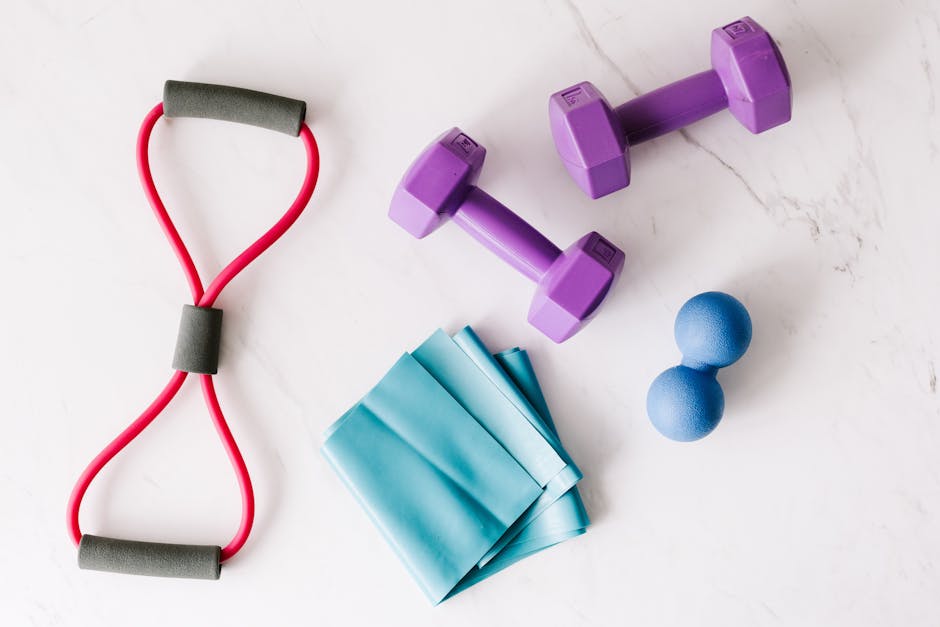
You can absolutely build a “masterpiece” of a physique using nothing but your own body weight. However, adding a few tools can provide more variety.
- Resistance Bands: These are the “Swiss Army Knife” of home fitness. They are space-efficient, affordable, and provide “ascending resistance”—meaning the exercise gets harder as the band stretches.
- Dumbbells: If you have the space, a set of adjustable dumbbells is ideal for tracking dumbbell strength exercises for home workouts.
- Household Items: No weights? No problem. Milk jugs filled with water, heavy backpacks, or even large soup cans can serve as resistance. A sturdy chair is perfect for tricep dips.
For more ideas on getting started with minimal gear, see our guide on building upper body strength easy home workouts.
Adjusting Intensity for Beginners and Pros
To customize upper body routine home sessions effectively, you must understand how to make an exercise harder without necessarily adding more weight.
- Tempo Control: Slow down the movement. Instead of dropping quickly during a push-up, take three seconds to lower yourself. This increases “time under tension,” which is a primary driver for muscle growth.
- Rep Ranges: Beginners might aim for 8–10 reps to focus on form. Advanced trainees can push toward 15–20 reps or perform sets to “near failure” to stimulate the muscle.
- Rest Periods: Shortening your rest from 90 seconds to 30 seconds increases the metabolic demand of the workout, turning a strength session into a high-intensity burner.
- Regressions: If a standard push-up is too hard, move to your knees or use an elevated surface like a countertop.
Essential Muscle Groups and Movement Patterns
A common mistake in home training is focusing only on the “mirror muscles”—the ones you see in the glass, like chest and biceps. A truly customized routine balances Push vs. Pull movements.
- The Pushers: These include the chest (pectorals), shoulders (deltoids), and the back of the arms (triceps). Exercises like push-ups and overhead presses fall here.
- The Pullers: These include the back (latissimus dorsi, rhomboids, traps) and the front of the arms (biceps). Think of rows or pull-up variations.
- The Stabilizers: Your core is the bridge between your upper and lower body. Every upper body movement requires core stability to protect the spine.
| Movement Pattern | Primary Muscles | Home Exercise Example |
|---|---|---|
| Horizontal Push | Chest, Shoulders, Triceps | Standard Push-up |
| Horizontal Pull | Mid-back, Biceps | Bent-over Row (with cans/bands) |
| Vertical Push | Shoulders, Triceps | Pike Press or Overhead Press |
| Vertical Pull | Lats, Biceps | Resistance Band Lat Pulldown |
Balancing Your Customize Upper Body Routine Home
To maintain muscle symmetry and support your posture, we suggest a 1:1 or even a 2:1 ratio of pulling to pushing exercises. Because most of us spend our days in a “pushed” forward position (typing), we need extra “pulling” volume to open the chest and strengthen the back. This balance is what prevents the rounded-shoulder look and keeps your joints healthy.
Targeting Specific Goals: Toning vs. Mass
How you customize upper body routine home workouts depends on your “Why.”
- For Toning/Endurance: Use lighter resistance and higher repetitions (15–20 reps). Focus on short rest periods to keep the heart rate up.
- For Muscle Mass (Hypertrophy): Use moderate to heavy resistance where you struggle to finish 8–12 reps. Focus on the “eccentric” (lowering) phase of the lift.
- For Functional Strength: Focus on compound movements—exercises that use multiple joints at once, like the at-home workout for upper body staples.
Top Exercises to Customize Upper Body Routine Home
Ready to sweat? Here are the “must-have” moves for your home library.
Bodyweight Classics for Strength and Stability
- Plank to Push-up: Start in a forearm plank. Push up onto your right hand, then your left, until you are in a high plank. Lower back down. This torches the core while hitting the chest and triceps.
- Superman Hold: Lie on your stomach and lift your arms and legs off the floor, squeezing your glutes and lower back. This is essential for the “posterior chain” (the muscles you can’t see).
- Inchworms: From standing, reach down and walk your hands out to a plank, then walk them back. It’s a great dynamic warm-up and shoulder stabilizer.
- Floor Dips: Sit on the floor with knees bent, hands behind you. Lift your hips and bend your elbows to work the triceps.
Using Resistance to Enhance Muscle Definition
- Bicep Curls: Use dumbbells or stand on a resistance band. Keep your elbows pinned to your ribs to ensure the bicep is doing the work.
- Lateral Raises: With light weights or a light band, lift your arms out to the sides like wings. This builds the “cap” of the shoulder, giving the illusion of a narrower waist.
- Overhead Press: Press your weights from shoulder height toward the ceiling. This is the ultimate test of vertical pushing strength.
- Bent-over Rows: Hinge at the hips, keep your back flat, and pull your weights toward your hips. Squeeze your shoulder blades together at the top.
Progression and Recovery: Ensuring Long-Term Success
The most important principle in fitness is progressive overload. This simply means you must challenge your muscles more over time. If you do 10 push-ups every day for a year, you’ll get good at 10 push-ups, but you won’t keep getting stronger. You must eventually do 11, then 12, or move to a harder variation.
Most people see significant results in 4–8 weeks if they stay consistent. However, muscle doesn’t grow while you are working out; it grows while you are recovering.
- Frequency: Aim for 2–3 upper body sessions per week.
- Rest: Allow 48–72 hours between training the same muscle groups.
- Nutrition: Muscle repair requires protein. Aim for a balanced diet with adequate lean protein sources.
- Sleep: Your body releases growth hormones during deep sleep. Aim for 7–9 hours a night.
Avoiding Common Mistakes in Home Training
Training at home is convenient, but without a coach watching you, it’s easy to fall into bad habits.
- Sloppy Form: Quality always beats quantity. If your back is arching during a push-up, drop to your knees. Check your form in a mirror or record yourself on your phone.
- Skipping Warm-ups: Cold muscles are prone to injury. Spend 5 minutes doing arm circles, cat-cow stretches, and light cardio to get the blood flowing.
- Neglecting the Posterior Chain: Don’t just work the muscles you see in the mirror. If you skip back exercises, you’ll end up with muscle imbalances and poor posture.
- Overtraining: More is not always better. If you feel constantly fatigued or your joints ache, you likely need more rest.
Frequently Asked Questions about Home Upper Body Training
How soon will I see results from a home routine?
With consistent effort (2–3 times a week) and a balanced diet, most people notice improved muscle tone and strength within 4 to 8 weeks. You might feel “stronger” within just two weeks as your nervous system learns how to coordinate the movements.
Can I build significant muscle without heavy weights?
Yes! By using techniques like slowing down the tempo, increasing repetitions, and using “mechanical tension” (choosing harder exercise variations like decline push-ups), you can stimulate muscle growth effectively without a barbell.
How often should I train my upper body each week?
For optimal results, we recommend 2 to 3 sessions per week. This allows enough volume to trigger growth while providing the necessary 48 hours of rest between sessions for muscle repair.
Conclusion
Building a strong, toned, and functional upper body doesn’t require a monthly membership or a basement full of iron. By learning how to customize upper body routine home plans, you take control of your fitness journey on your own terms.
At Casa e Jardim Web, we believe that effective strength training should be accessible to everyone, from the busy professional to the stay-at-home parent. Start small, focus on your form, and remember that consistency is the “secret sauce” to transformation.
Ready to dive deeper into your fitness journey? Explore more strength training guides on our site and start personalizing your progress today!
