
Why Advanced Bodyweight Arm Exercises Deliver Real Results
Advanced bodyweight arm exercises are one of the most effective ways to build strong, defined arms — no gym, no dumbbells, no excuses.
Here’s a quick look at the best ones to know:
| Exercise | Primary Target | Difficulty |
|---|---|---|
| Archer Push-Up | Triceps, chest, shoulders | Advanced |
| Tiger-Bend Push-Up | Triceps, shoulders | Advanced |
| Decline Diamond Push-Up | Triceps (all 3 heads) | Advanced |
| Pseudo Planche Push-Up | Biceps, forearms, wrists | Advanced |
| One-Arm Scapula Push-Up | Scapular stabilizers, triceps | Elite |
| Towel Chin-Up | Biceps, forearms, grip | Advanced |
| Fingertip Push-Up | Grip, wrists, triceps | Advanced |
Most people assume you need heavy weights to build serious arm strength. That’s simply not true.
Research shows that training a muscle close to failure — regardless of the load — produces comparable muscle growth to heavy lifting. Your own bodyweight, used cleverly, is enough to push your arms to their limit.
The catch? Standard push-ups and basic dips won’t cut it forever. Once your body adapts, you need smarter, harder movements — ones that use leverage, tempo, and unilateral loading to keep the challenge high.
This guide compares the best advanced techniques and exercises so you can choose what fits your goals and current level.

The Science Behind Advanced Bodyweight Arm Exercises
When we talk about “getting gains” without a barbell, we are relying on the same biological signals that bodybuilders use. Muscle growth, or hypertrophy, is driven by three primary factors: mechanical tension, muscle damage, and metabolic stress.
Scientific research, including a notable 2017 Sports Medicine meta-analysis, confirms that as long as you are pushing your muscles to the point of fatigue (near failure), your body will respond by building more muscle tissue. It doesn’t care if the resistance comes from a 50-pound plate or your own torso.
In our journey of Building Upper Body Strength: Easy Home Workouts, we emphasize that the triceps actually make up about two-thirds of your upper arm mass. To get that “crushed” look, we have to target all three heads: the long, medial, and lateral heads. Advanced bodyweight moves are particularly good at this because they often require intense stabilization from the brachialis (the muscle sitting under the biceps) and the forearms.
| Feature | Beginner Exercise | Advanced Bodyweight Arm Exercises |
|---|---|---|
| Resistance | Distributed evenly across two limbs | Shifted to one limb or extreme angles |
| Stability | High (stable base) | Low (requires core and stabilizer engagement) |
| Leverage | Mechanical advantage (easier) | Mechanical disadvantage (harder) |
| Muscle Fiber Recruitment | Standard motor units | High-threshold motor units |
Mastering Leverage in Advanced Bodyweight Arm Exercises
The secret sauce of advanced calisthenics is leverage. Since we can’t just “add a plate” to our bodies (unless we wear a weighted vest), we have to change the physics of the movement. This involves manipulating our center of gravity and the “fulcrum” (usually our joints).
When you Push Your Limits with These Beginner Variations and Challenges, you start to realize that moving your hands just two inches toward your hips in a push-up significantly increases the torque on your elbows and wrists. Unilateral loading—forcing one arm to carry more than 50% of your weight—is another elite tactic. This not only builds raw strength but also bulletproofs your joint stability, which is essential for preventing injury as you get stronger.
Elite Movements for Triceps and Biceps
Ready to move past the basics? These exercises are designed to set your sleeves on fire. We recommend mastering the form of standard movements before attempting these, as the intensity is significantly higher.
1. The Tiger-Bend Push-Up
This is a triceps-dominant masterpiece. Starting in a standard push-up position, you lower your forearms until they touch the ground, then press back up through your palms to return to the high plank. It isolates the triceps in a way few other bodyweight moves can.
2. Archer Push-Ups
By extending one arm straight out to the side and performing a push-up primarily with the other arm, you are essentially doing a “self-assisted” one-arm push-up. This creates massive mechanical tension on the triceps and chest of the working arm.
3. Triangle (Diamond) Push-Ups
Don’t let the simplicity fool you. An ACE study on triceps activation found that triangle push-ups actually elicit more muscle fiber activity in the triceps than cable push-downs or kickbacks. By keeping your hands in a diamond shape under your chest, you force the triceps to do the heavy lifting.
4. Sphinx Push-Ups
Similar to the Tiger-Bend but performed from a forearm plank. You press your palms into the floor to lift your elbows, focusing entirely on triceps extension. It’s a “compound-isolation” move that provides an incredible pump.
5. Pseudo Planche Push-Ups
If you want to target your biceps and forearms while pushing, this is your move. In a Home Chest Workout: Pump Up Your Pecs Without Leaving the House, we usually focus on the chest, but by turning your hands backward and leaning your shoulders forward past your wrists, the biceps must work overtime to stabilize the elbow joint.
6. Towel Chin-Ups
Standard chin-ups are great for biceps, but hanging two towels over the bar and gripping those instead takes it to the elite level. The neutral grip and the instability of the towels force your brachialis and forearms to work at 100% capacity.
7. One-Arm Scapula Push-Ups
This is a “gateway” skill for elite calisthenics. It involves maintaining a one-arm plank and moving only your shoulder blade (protraction and retraction). It builds the scapular stability required for one-arm chin-ups and planches.
8. Fingertip Push-Ups
Often associated with martial arts, these are fantastic for building grip power and wrist stability. They strengthen the small muscles of the hand and forearm, which are often the “weak link” in advanced pulling movements.
Hypertrophy and Advanced Bodyweight Arm Exercises
To maximize muscle growth, we don’t just count reps; we count “Time Under Tension” (TUT). When performing these advanced bodyweight arm exercises, we recommend an eccentric focus. This means taking 3 to 5 seconds to lower your body during the “negative” phase of the movement.
Research shows that the eccentric phase causes the most microscopic muscle damage, which is the primary trigger for protein synthesis and muscle fiber recruitment. By slowing down, you make a “light” bodyweight move feel incredibly heavy. This is why No Equipment Home Exercises can be just as effective as a gym session—it’s all about how you manipulate the tempo.
Programming for Maximum Growth and Performance
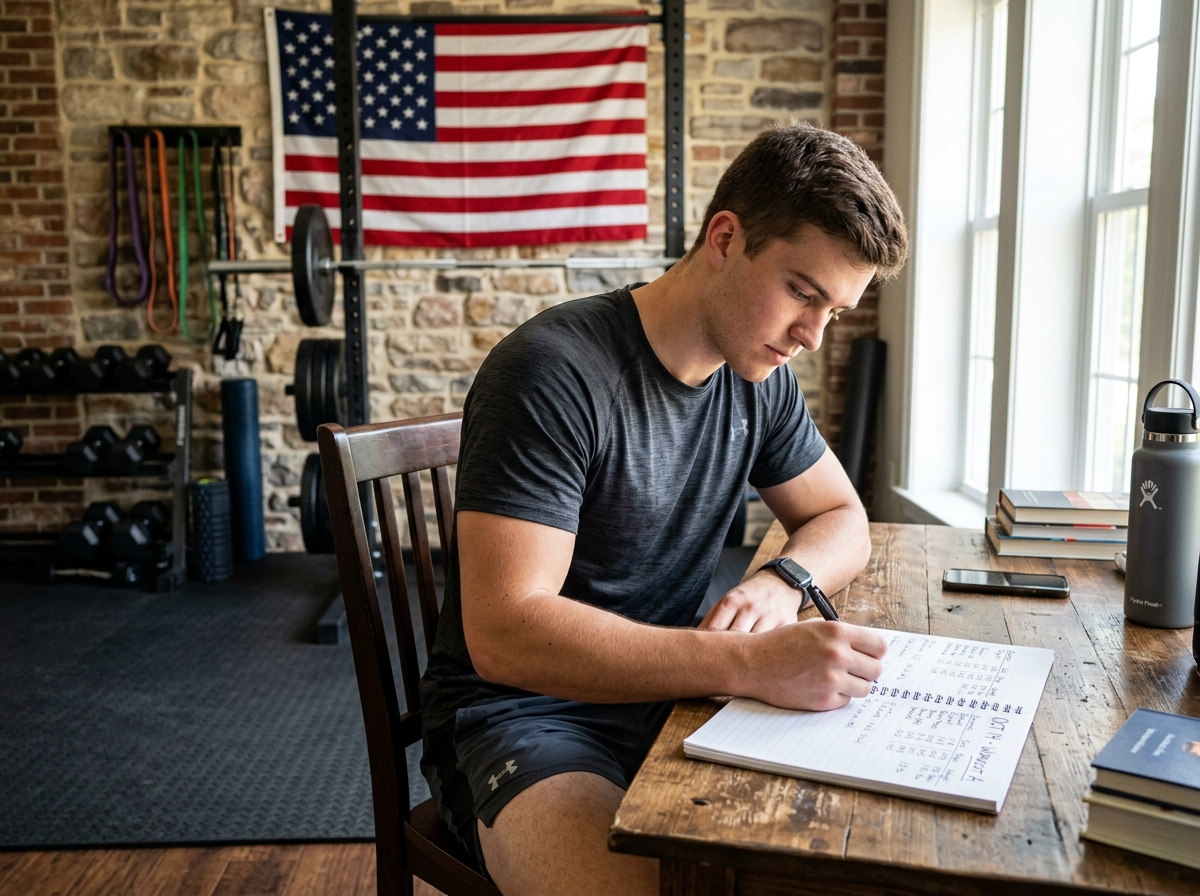
How you structure your workout is just as important as the exercises you choose. For advanced bodyweight arm exercises, we generally follow these guidelines:
- For Raw Strength: Aim for 6–8 reps of an exercise so difficult you can barely finish the last one. Perform 3–4 sets.
- For Hypertrophy (Muscle Size): Aim for 8–12 reps with a controlled tempo. Perform 3–5 sets.
- For Endurance: Aim for 12+ reps or “Greasing the Groove” (performing small sets throughout the day).
If you’re taking our Jumpstart Your Fitness: 30-Day Strength Training Challenge, you’ll know that recovery is where the magic happens. We suggest at least 48 hours of rest between intense arm sessions.
Nutrition and Lifestyle for Elite Arms
You cannot build muscle out of thin air. To support these high-intensity workouts, aim for 0.7 to 1 gram of protein per pound of bodyweight daily. Hydration is also a “secret” performance enhancer—even a 2% drop in body water can significantly decrease your strength levels.
Interestingly, these arm exercises aren’t just for show. For our runners out there, strong arms improve running form efficiency by providing a more powerful arm swing and better posture support during long distances.
Advanced Progression Techniques
If a movement starts feeling “easy,” use these techniques to intensify it:
- Slower Tempo: 5 seconds down, 2-second pause at the bottom.
- Reduced Rest: Cut your rest from 90 seconds to 30 seconds to increase metabolic stress.
- Active Pauses: Hold the most difficult part of the rep (the “sticking point”) for 3 seconds.
- Mechanical Drop Sets: Perform an advanced move (like Archer Push-ups) until failure, then immediately switch to a standard push-up to “burn out” the muscle.
Essential Warm-ups and Common Mistakes to Avoid
Before you dive into a set of Tiger-Bends, you must prepare your joints. Advanced movements put significant stress on the wrists and elbows.
Essential Warm-up Drills:
- Wrist Rocks: On all fours, gently rock forward and backward to stretch the forearms.
- Scapular Circles: In a plank position, make small circles with your shoulders without bending your elbows.
- Inchworm Walk-outs: Great for warming up the entire posterior chain and the shoulders simultaneously.
We always remind our community in our At-Home Workout for Upper Body that form is king. Here are the most common mistakes we see:
- Elbow Flaring: In triceps moves, keep your elbows tucked close to your ribs. Flaring them out puts unnecessary stress on the shoulder joint.
- Using Momentum: If you have to “bounce” to get through a rep, the exercise is too hard. Regress to a simpler version until you can control the movement.
- Core Neglect: A sagging middle ruins the leverage of a push-up. Engage your glutes and abs to maintain a straight line from head to heels.
- Skipping Scapular Stabilization: If your shoulder blades are “winging” (sticking out), you aren’t stable. Focus on pushing the floor away.
Frequently Asked Questions about Advanced Arm Training
Can advanced bodyweight exercises build as much mass as weights?
Absolutely. The science of hypertrophy tells us that the body responds to tension and fatigue, not the specific tool. If you perform advanced bodyweight arm exercises with enough intensity to reach near-failure, you will stimulate the same muscle fiber recruitment as you would with dumbbells. While weights make it easier to track “progressive overload” by adding pounds, bodyweight training does it by changing angles and leverage.
How often should I perform advanced bodyweight arm exercises?
For most advanced trainees, 2–3 times per week is the “sweet spot.” Because these movements are systemically taxing, your central nervous system needs time to recover. Watch for signs of overtraining, such as persistent joint pain or a decrease in your maximum rep count.
What is the hardest bodyweight arm exercise to master?
While it’s subjective, the one-arm chin-up and the full planche are often considered the “holy grails” of arm strength. They require an incredible amount of grip strength, bicep power, and scapular stability that can take years of dedicated practice to achieve.
Conclusion
At Casa e Jardim Web, we believe that your body is the only gym you truly need. By mastering advanced bodyweight arm exercises, you aren’t just building “show muscles”—you’re developing functional fitness, joint resilience, and a level of body control that translates to every other area of your life.
Consistency is your greatest ally. Don’t be afraid to start with the “easier” advanced variations and slowly work your way up. Remember to focus on progressive overload, keep your nutrition on point, and listen to your body’s recovery signals.
Ready to take the next step in your fitness journey? Check out More info about strength training programs on our site and start crushing those goals today!
