
Your Back Deserves a Workout Too — Even Without a Gym
Home back exercises no equipment are not just possible — they are highly effective. Here are the best ones you can start today:
- Superman – Lie face down, lift arms and legs off the floor, hold 2-3 seconds
- Bird Dog – From hands and knees, extend opposite arm and leg
- Reverse Snow Angel – Lie face down, sweep arms from hips to overhead
- Wall Slides – Stand against a wall, slide arms up while keeping contact
- Inverted Row (under a table) – Grip a table edge and pull your chest up to it
- Bridge – Lie on your back, squeeze glutes and lift your hips
- Swimmer – Alternate lifting opposite arm and leg while lying face down
- Prone Y-T-W – Lie face down and move arms into Y, T, and W shapes
- Scapular Push-ups – In plank, squeeze and release shoulder blades without bending elbows
- Pike Push-up – In an inverted V shape, lower your forehead toward the floor
Here is a hard truth: 8 out of 10 people will experience back pain at some point in their lives. Yet the back is one of the most neglected muscle groups in home workout routines.
It makes sense why. Most bodyweight training leans heavily on pushing moves — push-ups, squats, lunges. Pulling movements feel harder to do without a bar or machine. So the back gets skipped.
But your back muscles do a lot of heavy lifting in everyday life — literally. They support your spine when you sit, help you stand tall, and power nearly every upper-body movement you make. Weak back muscles mean a vulnerable spine.
The good news? You do not need a gym or any equipment to fix that. The exercises in this guide target your lats, rhomboids, trapezius, and erector spinae — the key muscles that hold your posture together and protect your lower back.
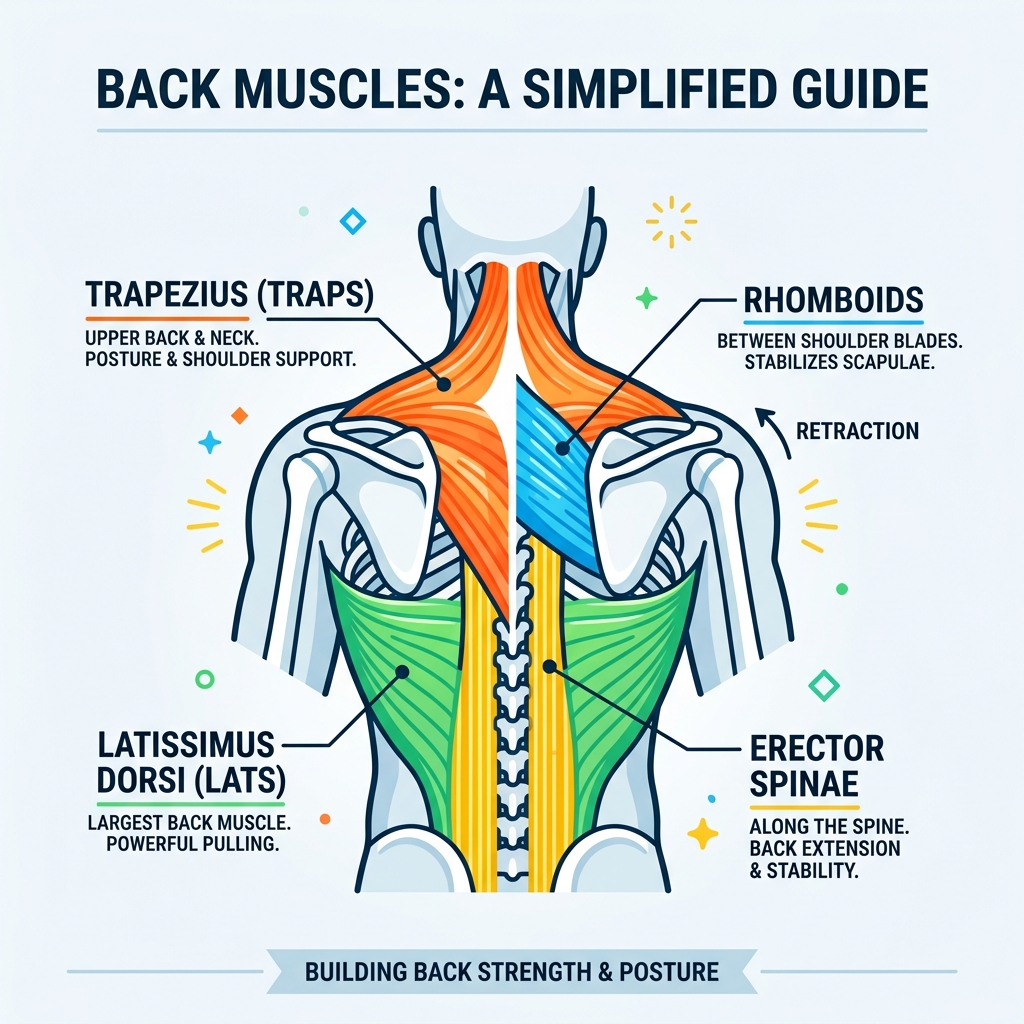
Why You Need Home Back Exercises No Equipment
If we look at the global landscape of health, the numbers are sobering. According to Scientific research on global low back pain trends, low back pain affected approximately 619 million people in 2020. Projections suggest this number will climb to a staggering 843 million by 2050. We are living in an era where sedentary lifestyles—hunching over laptops and scrolling through smartphones—are the norm, and our backs are paying the price.
At Casa e Jardim Web, we believe that fitness should be accessible to everyone, regardless of whether they have a gym membership or a rack of dumbbells. This is where bodyweight-exercises-for-home come into play. Strengthening your back without equipment isn’t just a “backup plan” for when the gym is closed; it is a superior way to recruit stabilizer muscles like the multifidus and gluteus medius. These tiny muscles provide the joint stability that heavy machines often bypass.
By focusing on home back exercises no equipment, we achieve several key benefits:
- Functional Strength: You use your back to pick up groceries, tie your shoes, and carry children. Bodyweight moves mimic these real-world patterns.
- Spinal Support: Strong erector spinae muscles act like a natural corset for your spine, keeping it aligned and reducing the pressure on your discs.
- Injury Prevention: Most injuries occur because of a lack of control, not a lack of raw power. Bodyweight training improves your mind-muscle connection and body awareness.
- Joint-Friendly Training: Unlike heavy deadlifts which can be taxing on the central nervous system and joints if form slips, bodyweight moves are generally lower impact and easier to recover from.
Top 10 Home Back Exercises: No Equipment Required
Ready to build a back that would make a superhero jealous? Let’s explore the movements. You don’t need a pull-up bar or a row machine—just a bit of floor space and perhaps a sturdy piece of furniture.
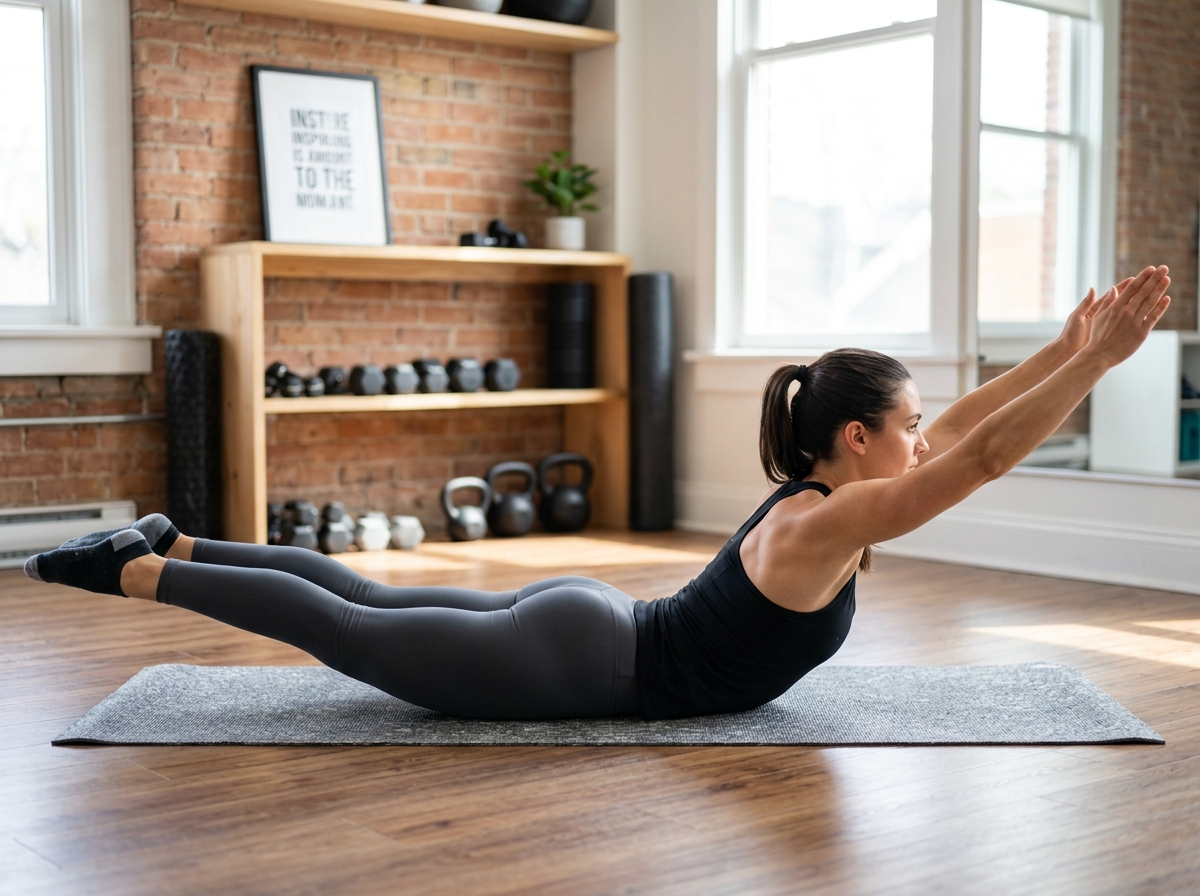
1. The Superman
This is the gold standard for lower back and glute activation. By lifting your limbs against gravity while prone, you force the entire posterior chain to engage. It’s excellent for building that “arch” strength needed for good posture.
2. Bird Dog
A favorite in physical therapy offices worldwide. This move challenges your balance and cross-body coordination. It targets the erector spinae and the core, teaching your body how to stabilize the spine while the limbs are in motion.
3. Reverse Snow Angel
Forget the cold—this version is done face-down on your carpet. It targets the lats and the mid-back (rhomboids). Keep your arms straight and move them in a wide arc from your hips to above your head, making sure your hands never touch the floor.
4. Wall Slides
If you spend eight hours a day at a desk, this is your new best friend. It’s one of the most effective at-home-workout-for-upper-body movements for opening up the chest and strengthening the lower trapezius. The goal is to keep your knuckles, elbows, and back glued to the wall as you slide your arms up and down.
5. Inverted Row (The Table Row)
Who says you need a barbell to row? Find a sturdy dining table, lie underneath it, and grab the edge. Pull your chest toward the underside of the table. It’s a fantastic horizontal pull that hits the lats and biceps.
6. Bridge
While often thought of as a glute exercise, the bridge is vital for lower back health. It strengthens the muscles that support the base of the spine. For an extra challenge, try reaching one arm across your body toward the opposite shoulder at the top of the lift.
7. Swimmer
Similar to the Superman but more dynamic. You alternate lifting the opposite arm and leg in a fluttering motion. This creates a “contralateral” load that keeps the stabilizing muscles of the spine firing rapidly.
8. Prone Y-T-W
This is an alphabet of back strength. While lying face down, move your arms into a ‘Y’ shape, then a ‘T’, then bend your elbows into a ‘W’. Each position targets a different section of the trapezius and deltoids.
9. Scapular Push-ups
Most people do push-ups for the chest, but the “scap” version is all about the upper back. Keep your arms locked straight and simply move your shoulder blades together and then apart. This improves “scapular health,” which is the foundation of shoulder mobility.
10. Pike Push-up
By shifting your weight forward into an inverted ‘V’ shape, you move the emphasis from the chest to the shoulders and upper back. It’s a great way to build vertical pushing strength without weights.
Exercise Comparison Table
To help you structure your routine, we’ve broken down these home back exercises no equipment by their primary focus:
| Exercise | Primary Target | Difficulty | Est. Calorie Burn (10 min) |
|---|---|---|---|
| Superman | Lower Back / Glutes | Beginner | 40-50 |
| Bird Dog | Spinal Stabilizers | Beginner | 35-45 |
| Inverted Row | Lats / Rhomboids | Advanced | 60-80 |
| Wall Slides | Lower Traps / Posture | Beginner | 20-30 |
| Reverse Snow Angel | Mid-Back / Shoulders | Intermediate | 45-55 |
| Pike Push-up | Upper Back / Shoulders | Advanced | 70-90 |
How to Perform Home Back Exercises No Equipment
Doing the move is one thing; doing it right is another. To get the most out of these exercises, we need to focus on the mind-muscle connection. Because we aren’t using heavy external weights, we have to “create” the tension ourselves.
- Neutral Spine: Always keep your neck in line with your spine. In prone exercises (lying on your stomach), look at the floor, not forward. This prevents neck strain.
- Core Engagement: Think of pulling your belly button away from the floor. This protects your lower back from over-arching. For more on this, check out our home-workout-for-men-beginners guide.
- Scapular Retraction: Before you pull or lift, imagine squeezing a pencil between your shoulder blades. This ensures the back muscles are doing the work rather than just the arms.
- Controlled Tempo: Avoid using momentum. A “2-2-2” tempo is great: 2 seconds to lift, a 2-second squeeze at the top, and 2 seconds to lower.
- Breathing: Exhale on the effort (the lift) and inhale on the return. Never hold your breath, as this increases internal pressure unnecessarily.
Form, Progressions, and Routine Integration
Consistency is the secret sauce. You can’t do one session of home back exercises no equipment and expect a lifetime of pain-free movement. You need a plan.
Progressive Overload
Since we aren’t adding weight plates, we progress by:
- Adding Reps: If 10 Supermans feel easy, go for 20.
- Increasing Time Under Tension: Hold the top of that Bird Dog for 5 seconds instead of 2.
- Reducing Rest: Shorten your breaks between sets from 60 seconds to 30 seconds.
- Adjusting Angles: In the Inverted Row, the flatter your body is, the harder the exercise becomes.
The Weekly Routine
For most people, we recommend training the back 2-3 times per week on non-consecutive days. This allows 48 hours for the muscle fibers to repair and grow. A solid full-body-home-workout-plan should include at least two pulling movements for every one pushing movement to balance out our “hunchback” modern posture.
Sample 15-Minute Back Circuit:
- Warm-up: 5 minutes of arm circles, cat-cow stretches, and light jogging.
- Circuit (Repeat 3 times):
- Superman: 15 reps
- Bird Dog: 10 reps per side
- Reverse Snow Angels: 12 reps
- Wall Slides: 10 reps
- Rest 60 seconds between rounds.
- Cool-down: 2 minutes of Cobra pose and Child’s pose.
If you are just starting out, our easy-home-workout-without-equipment can help you build the foundational strength needed for the more advanced moves like the Inverted Row or Pike Push-up.
Frequently Asked Questions about Home Back Exercises No Equipment
Can I build a strong back without using weights?
Absolutely. While you might not build the massive “bulk” of a professional bodybuilder, you can certainly develop significant lean muscle definition, endurance, and functional strength. The key is to use advanced variations—like one-arm variations or long isometric holds—to keep challenging the muscles as they get stronger. Consistency and progressive overload are far more important than the equipment you use.
How often should I perform these back exercises?
We suggest 2 to 3 sessions per week. Your muscles need time to recover; training the same group every single day can lead to overuse injuries and diminished returns. Always aim for at least 48 hours of rest between intense back sessions. On your “off” days, focus on light movement or stretching to keep the blood flowing.
Will these exercises help alleviate my chronic back pain?
For many people, yes. Most non-specific back pain is caused by weakness and poor posture. By strengthening the muscles that support the spine, you reduce the load on the joints and ligaments. However, if you have sharp, shooting pain, or a diagnosed condition like a herniated disc, you must consult a healthcare professional before starting any new routine. Exercise is medicine, but the dosage and type must be right for your specific body.
Conclusion
At Casa e Jardim Web, our mission is to show you that your living room is all the gym you’ll ever need. Home back exercises no equipment are the ultimate “no excuse” solution to the modern epidemic of back pain and poor posture. By investing just 15 to 20 minutes a few times a week into these movements, you are making a long-term deposit into your spinal health.
Fitness is not about the intensity of a single workout; it’s about the consistency of your habits. Start with the beginner moves, focus on your form, and listen to your body. Your future, pain-free self will thank you for the work you put in today.
Ready to take your training to the next level? Explore More info about strength training services and discover how to build a complete, balanced physique from the comfort of your home. No gym? No problem. No excuses!
