
The Lazy Person Guide to Fitness Tricks at Home
You Don’t Need a Gym to Get Fit — Here’s Why
Fitness tricks at home are one of the smartest ways to stay active, build strength, and hit your health goals — no membership required.
Here’s a quick overview of the most effective home fitness strategies:
- Use bodyweight exercises — squats, push-ups, planks, and lunges work multiple muscle groups with zero equipment
- Keep sessions short — 20-30 minutes a day, a few times a week, is enough to see real results
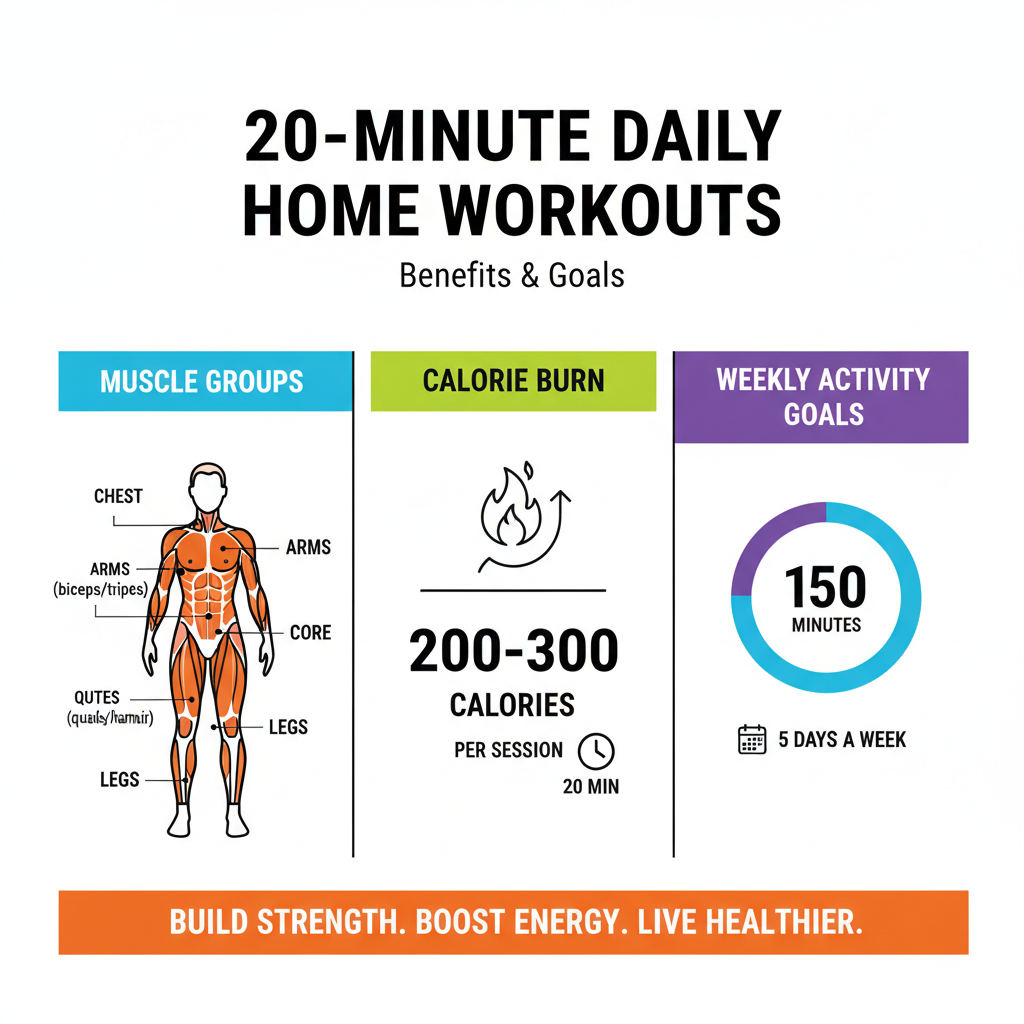
- Hit the 150-minute weekly target — health guidelines recommend at least 150 minutes of moderate activity per week
- Start small — even 10-minute sessions count and build momentum over time
- Be consistent — short, regular workouts beat long, infrequent ones every time
- Use what you have — stairs, towels, and a yoga mat-sized space are all you need
Most people skip exercise for two reasons: no time and no gym access. But research backs up what many have discovered on their own — you don’t need either.
Bodyweight exercises are proven to build strength, improve aerobic fitness, and help manage body fat. And adults who hit even modest activity targets — around 20 to 30 minutes a day — see meaningful improvements in their health and longevity.
The best part? You can do all of it from your living room.
Setting the Stage: Low-Effort Fitness Tricks at Home
When we talk about the “lazy person’s guide,” we aren’t talking about avoiding work; we’re talking about maximizing efficiency. The biggest barrier to working out isn’t the exercise itself—it’s the “getting there.” By utilizing fitness tricks at home, we eliminate the commute, the expensive fees, and the “gymtimidation” that keeps many of us on the couch.
To succeed, we need to treat our home like a sanctuary of health, even if that sanctuary is just a six-foot patch of carpet.
Creating Your “No-Excuse” Zone
You don’t need a dedicated spare room to get fit. Research shows that a space the size of a yoga mat is more than enough for a full-body workout. The trick is to have your gear—whether it’s just a mat or a pair of sneakers—ready to go. If you have to spend ten minutes digging a mat out of a dusty closet, you’ve already lost the mental battle.

Eliminating Distractions and Habit Stacking
The TV and the fridge are the natural enemies of the home workout. To stay focused, we recommend turning off notifications and perhaps putting on a dedicated “workout playlist” that signals to your brain that it’s time to move.
One of our favorite fitness tricks at home is “habit stacking.” This means pairing your workout with an existing habit. For example, do 20 squats while the coffee is brewing, or hold a plank during the commercial breaks of your favorite show. By attaching exercise to things you already do, consistency becomes effortless. We’ve found that Home Exercise Motivation Tips often boil down to making the healthy choice the easiest choice. If you are just starting out, check out these Fitness Motivation Tips for Beginners to help build that initial momentum.
Beginner-Friendly Fitness Tricks at Home
If you haven’t exercised in years, the thought of a “burpee” might sound like a form of medieval torture. That’s okay! The key is to start with “regressions”—easier versions of classic moves.
- Chair Squats: Instead of hovering in mid-air, sit down on a sturdy chair and stand back up. It builds the same functional strength with a safety net.
- Knee Push-ups: Traditional push-ups are hard. Dropping to your knees reduces the weight your upper body has to lift while still toning your chest and arms.
- Wall Sits: Lean against a wall and slide down until your thighs are parallel to the floor. Hold it for 30 seconds. It’s a “lazy” move that makes your legs burn in the best way possible.
Many people fall into the trap of doing too much too soon. To keep your joints happy, make sure to read up on Beginner Fitness Mistakes to Avoid. You can also find a great list of No Equipment Home Exercises to get you moving without spending a dime.
Advanced Fitness Tricks at Home
Once the basics feel like a breeze, we need to introduce progressive overload. This is the fancy fitness term for “making things harder so you keep getting stronger.” You don’t need heavier weights for this; you just need to change the mechanics.
- Pistol Squats: This is a one-legged squat. It requires immense balance and leg strength, turning a standard move into an elite challenge.
- Burpees: The ultimate “bang-for-your-buck” move. It combines a squat, a plank, a push-up, and a jump. It’s a “real doozy,” as some say, but incredibly effective for heart health.
- Time Under Tension: Instead of rushing through 20 push-ups, try lowering yourself for a count of five seconds and pushing up for a count of five. This “slow-motion” trick forces your muscle fibers to work much harder.
For those ready to level up, exploring Bodyweight Exercises for Home can provide the variety needed to keep the body guessing.
The “No-Gym” Arsenal: Effective Bodyweight Moves
Is bodyweight training actually effective? Absolutely. A PRISMA-compliant systematic review found that home-based exercise programmes significantly improve the physical fitness of healthy adults. You aren’t “settling” for a home workout; you are choosing a scientifically backed method of transformation.
The Big Four Muscle Groups
To get a full-body benefit, we focus on four primary movements that target every major muscle group:
- Squats (Lower Body): These target your glutes, quads, and hamstrings. Keep your feet shoulder-width apart, hinge at the hips, and imagine sitting in an invisible chair.
- Push-ups (Upper Body): These work your chest, shoulders, and triceps. If you keep your core tight, they also act as a “moving plank.”
- Planks (Core Stability): Planks improve overall strength and athletic performance while reducing the risk of back injury. The goal is a straight line from head to heels.
- Lunges (Balance and Legs): Step forward and lower your hips until both knees are bent at a 90-degree angle. This is fantastic for “functional” fitness—the kind that helps you carry groceries or run after kids.
By combining these into a circuit, you create an Easy Home Workout Without Equipment that rivals any expensive gym class.
Quick Wins: 10-20 Minute Routines for Busy People
We’ve all had those days where the schedule is packed from dawn to dusk. The “lazy” secret? You don’t need an hour. Even a 10-minute “micro-workout” can boost your metabolism and mood.
The Power of METs and HIIT
METs (Metabolic Equivalents) measure how much energy you burn. By doing High-Intensity Interval Training (HIIT), we can spike our METs in a very short window. A simple 10-minute circuit might look like this:
- 40 seconds of Jumping Jacks
- 20 seconds of rest
- 40 seconds of Mountain Climbers
- 20 seconds of rest
- Repeat 5 times.
Household Item Hacks
If you want to add resistance without buying dumbbells, look around your house.
- The Towel Trick: Use a towel for isometric holds. Wrap it around a sturdy pole (or under your feet while standing) and pull with 100% effort for 20 seconds. Since the towel doesn’t move, your muscles have to exert maximal force to “fight” it.
- Stair Cardio: Walking up and down stairs is one of the best ways to improve cardiovascular health. Want to make it harder? Carry a laundry basket full of clothes or a couple of detergent bottles to create “weighted cardio.”
For more ideas on how to squeeze fitness into a hectic life, check out our Fitness Tips for Busy People and this Quick Fat Burning Home Routine.
Safety First: Warm-Ups, Cool-Downs, and Recovery
One of the biggest “lazy person” mistakes is skipping the warm-up and ending up on the couch for two weeks with a pulled muscle. A proper warm-up “greases the joints” and raises your body temperature, making your muscles more pliable.
Warm-Up vs. Cool-Down
It is important to understand the difference between the two. We use dynamic movements to start and static stretches to finish.
| Feature | Dynamic Warm-Up (Before) | Static Stretching (After) |
|---|---|---|
| Purpose | Prep muscles & joints | Improve flexibility & relax |
| Movement | Active (Arm circles, leg swings) | Stationary (Hold for 30s) |
| Heart Rate | Increases gradually | Decreases gradually |
| Example | Marching in place | Forward fold / Toe touch |
Listening to Your Body
Recovery is just as important as the workout itself. If you are feeling sharp pain (not just muscle soreness), stop. Physical Activity Guidelines recommend 150 minutes of moderate activity, but they also emphasize strengthening exercises twice a week and plenty of rest. Proper nutrition also plays a role; a Home Workout and Diet Plan ensures you have the fuel to recover and build muscle.
Frequently Asked Questions about Home Fitness
Can I build muscle at home without equipment?
Yes, 100%. Muscle hypertrophy (growth) occurs when you challenge your muscles close to the point of failure. By using fitness tricks at home like slowing down your reps (time under tension) or using harder variations (like one-legged movements), you can create enough resistance to build significant strength and muscle mass. Your body doesn’t know the difference between a 20lb dumbbell and the weight of your own torso; it only knows tension.
How do home workouts compare to gym workouts?
In terms of pure effectiveness, they are remarkably similar. A PRISMA-compliant systematic review suggests that home-based programs are highly effective for improving physical fitness, especially for those who find the gym environment intimidating or inaccessible. The main advantage of the home workout is consistency. It is much easier to commit to a 20-minute session in your living room than a 90-minute round trip to a commercial gym.
What are the best exercises for burning belly fat at home?
It’s a common myth that you can “spot reduce” fat from your stomach. To lose belly fat, you need to be in a caloric deficit (burning more than you eat). The best fitness tricks at home for this are “compound movements” like burpees, squats, and mountain climbers. These exercises use multiple large muscle groups at once, which burns more calories per minute than isolated moves like crunches.
Conclusion
At Casa e Jardim Web, we believe that fitness should be accessible to everyone, regardless of their budget or schedule. You don’t need a fancy gym or expensive equipment to transform your health; you just need a bit of space and the willingness to start.
By using these fitness tricks at home, you can meet the 150-minute weekly activity goal, improve your mental health, and boost your longevity. The “lazy” way to get fit isn’t about doing nothing—it’s about making exercise so convenient that you have no reason to say no.
Ready to take the first step? Start your journey with our full home workout category and discover how simple staying healthy can really be.
