
Why Glute Exercises for Men at Home Deserve a Spot in Your Routine
Glute exercises for men at home are one of the most effective ways to build real lower-body strength — no gym, no equipment, no excuses.
Here are the best bodyweight glute exercises you can do at home right now:
- Glute bridges – lie on your back, feet flat, push hips up and squeeze
- Bodyweight squats – feet shoulder-width apart, sit back and drive through heels
- Donkey kicks – on all fours, kick one leg back and up, squeezing at the top
- Fire hydrants – same starting position, lift knee out to the side
- Reverse lunges – step back, lower knee toward floor, push back up
- Clamshells – lie on your side, knees bent, rotate top knee open
- Bulgarian split squats – rear foot elevated on a chair, lower into a lunge
- Single-leg glute bridges – same as glute bridge but one leg extended
- Curtsy lunges – step one leg behind and across, then lower down
- Single-leg RDLs – hinge forward on one leg, extend the other behind you
Most men skip glutes entirely. They focus on chest, arms, and abs — and end up with a weak foundation that quietly causes problems everywhere else.
Here’s the thing: your glutes are the largest muscle group in your body. They power every step you take, every sprint you run, and every time you stand up from a chair.
Spend most of your day sitting? That’s a problem. Prolonged sitting can actually cause your glutes to “switch off” — a condition sometimes called gluteal amnesia (or “dead butt syndrome”). The result? Lower back pain, poor posture, and knee issues that seem unrelated but trace right back to weak, inactive glutes.
The good news is you don’t need a gym to fix it.
Why Men Should Prioritize Glute Exercises for Men at Home
When we talk about the “glutes,” we are actually talking about a complex trio of muscles that serve as the engine room for your entire body. Understanding these muscles helps us target them more effectively during our glute exercises for men at home.
- Gluteus Maximus: This is the big one. It’s the largest muscle in the human body and is primarily responsible for hip extension (moving your thigh back). It creates the shape of the rear and provides the explosive power needed for sprinting and jumping.
- Gluteus Medius: Located on the outer side of the pelvis, this muscle handles hip abduction (moving your leg away from your body) and rotation. More importantly, it’s a master stabilizer. Without a strong medius, your pelvis tilts and your knees cave in when you walk or run.
- Gluteus Minimus: The smallest of the three, sitting just under the medius. It helps with rotation and keeping the hip joint stable.
So, why should we care? Beyond looking better in a pair of jeans (though that is a nice perk), strong glutes are a biological insurance policy. Scientific research shows that “dead butt syndrome”—the medical term is gluteal amnesia—is a very real consequence of our modern, sedentary lifestyles. When we sit for 8–10 hours a day, our hip flexors become tight and overactive, while our glutes become overstretched and “forget” how to fire.
This leads to a domino effect of physical misery. When the glutes don’t do their job, the lower back and hamstrings have to pick up the slack. This is a leading cause of chronic lower back pain and hamstring strains. By performing consistent glute exercises for men at home, we restore pelvic stability, improve our posture, and shield ourselves from common injuries. Whether you’re looking to crush a weekend 5K or just want to stand up from your desk without a “groan,” a solid rear is the key. For those just starting out, our beginner’s guide to strength exercises for men is a great place to see how these movements fit into a broader plan.
The Best Bodyweight Glute Exercises for Men at Home
One of the biggest myths in fitness is that you need a 500-pound barbell to grow your glutes. While heavy weights are great, your body doesn’t actually know if you’re lifting a piece of iron or just moving your own mass against gravity. It only recognizes tension.
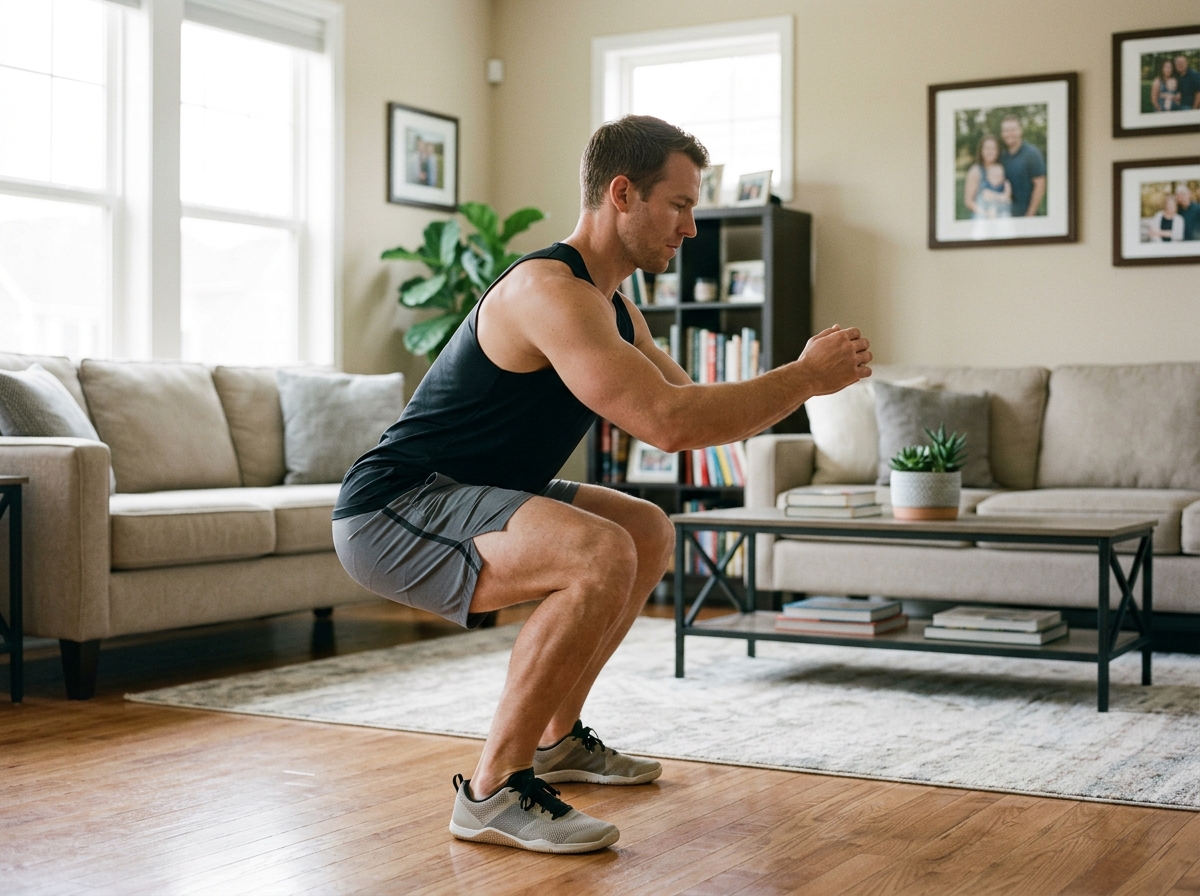
When performing glute exercises for men at home without equipment, we focus on three things: mind-muscle connection, time under tension, and range of motion.
Mind-muscle connection is especially vital for the glutes. Because many of us suffer from that “gluteal amnesia” we mentioned, we often perform squats or lunges using only our quads. To fix this, we have to consciously “squeeze” the glutes at the top of every rep. If you don’t feel the burn in your butt, you aren’t doing it right! We also use “tempo” to make bodyweight moves harder—lowering down slowly for three seconds and pausing at the bottom increases the workload on the muscle fibers.
If you are looking for more ways to stay fit without a gym membership, check out our guides on no-equipment home exercises and bodyweight exercises for home.
Beginner-Friendly Glute Exercises for Men at Home
If you haven’t trained your posterior chain in a while, start here. These moves are designed to “wake up” the muscles and build a foundation of movement quality.
- Glute Bridges: The gold standard for activation. Lie on your back with knees bent and feet flat on the floor. Squeeze your glutes hard and push your hips toward the ceiling. Hold for two seconds at the top, ensuring your lower back isn’t arching.
- Bodyweight Squats: Stand with feet slightly wider than hip-width. Imagine sitting back into an invisible chair. Keep your chest up and drive through your heels to return to standing, giving your glutes a firm squeeze at the top.
- Reverse Lunges: Step one foot back and lower your back knee until it almost touches the floor. This variation is often easier on the knees than forward lunges and puts a fantastic stretch on the gluteus maximus.
- Donkey Kicks: On all fours, keep your knee bent at 90 degrees and kick one heel up toward the ceiling. This is an isolation move that targets the “top” of the glute.
- Fire Hydrants: On all fours, lift one knee out to the side (like a dog at a… well, you know). This specifically targets the gluteus medius for better hip stability.
- Clamshells: Lie on your side with knees stacked and bent. Keep your feet together and open your top knee. It looks simple, but after 15 reps, your outer hips will be on fire.
For a structured approach to these movements, take a look at our lower body weight training plan for beginners.
Advanced Glute Exercises for Men at Home with Resistance
Once the basics feel easy, it’s time to turn up the heat. These exercises introduce “unilateral” (one-sided) loading, which forces the glutes to work much harder to maintain balance.
- Bulgarian Split Squats: Place one foot behind you on a chair or couch. Lower your hips until your front thigh is parallel to the ground. This is arguably the most “hated” exercise in the fitness world because of how effective it is at building glute size and strength.
- Single-Leg Glute Bridges: Perform a standard bridge but with one leg held straight out in the air. This doubles the weight your working glute has to lift.
- Frog Pumps: Lie on your back, put the soles of your feet together (knees out wide), and perform a bridge. This position takes the hamstrings out of the movement, forcing the glutes to do 100% of the work.
- Curtsy Lunges: Step one leg back and across the other leg. This adds a lateral component that hits the glute medius and minimus intensely.
- Single-Leg RDLs (Romanian Deadlifts): Stand on one leg with a slight bend in the knee. Hinge at the hips, reaching your hands toward the floor while your other leg extends straight behind you. This is incredible for “functional” balance and glute-hamstring integration.
You can find these and more in our full body weight training routine at home.
Leveling Up: Using Household Items for Progressive Overload
To keep muscles growing, we need progressive overload. This simply means making the workout harder over time. While you can do this by adding more reps or resting less, adding actual weight is the fastest path to a “rock solid rear.”
You don’t need a squat rack for this. Look around your house!
- The Backpack Strategy: Fill a sturdy backpack with books or water bottles. Wear it during squats, lunges, or step-ups.
- Water Bottle Weights: Two-liter soda bottles or gallon jugs of water make excellent makeshift dumbbells for lateral lunges or RDLs.
- The Couch/Chair: Use these for Bulgarian split squats or Hip Thrusts.
- The Power of the Hip Thrust: Research (such as the study found at https://pubmed.ncbi.nlm.nih.gov/26214739/) suggests that the hip thrust activates the glutes more effectively than the traditional back squat. To do this at home, lean your upper back against the edge of your couch, place a weighted backpack or a heavy water jug across your hips, and drive your hips upward.
By adding these household “weights,” you increase the mechanical tension on the muscle, which is the primary driver of hypertrophy (muscle growth). For more creative ways to use your environment, see our ultimate guide to full body weight training at home.
How to Structure Your Home Glute Workout Routine
Consistency is where the magic happens. We recommend training your glutes 2–3 times per week, allowing at least 48 hours of recovery between sessions. Muscles don’t grow while you’re working out; they grow while you’re sleeping and recovering!
| Feature | Beginner Routine | Advanced Routine |
|---|---|---|
| Frequency | 2 days per week | 3 days per week |
| Exercises | 3–4 basic moves | 5–6 complex/weighted moves |
| Sets | 2–3 per exercise | 3–4 per exercise |
| Reps | 12–15 (focus on form) | 8–12 (focus on resistance/tempo) |
| Rest | 60–90 seconds | 45–60 seconds |
A typical session should last 20–30 minutes. Start with a quick warm-up (like 2 minutes of marching in place and some light leg swings) to get the blood flowing. If you’re looking for a complete schedule, our home workout for men beginners can help you slot these glute moves into a full-week plan.
Common Mistakes and Form Fixes for Better Activation
If you aren’t seeing results, it’s usually a form issue. Here are the most common “glute killers” we see:
- Arching the Lower Back: In glute bridges and hip thrusts, many men arch their backs to get higher. This shifts the load to the spine. The Fix: Keep your ribs tucked down and your core engaged. Think about “scooping” your pelvis upward.
- Quad Dominance: If you only feel squats in the front of your thighs, your weight is likely too far forward. The Fix: Drive through your heels, not your toes. You should be able to wiggle your toes at the bottom of a squat.
- Knee Alignment: Letting your knees “cave in” (valgus) during lunges or squats is a recipe for ACL issues. The Fix: Actively push your knees outward so they track over your middle toes.
- Rushing the Reps: Using momentum to “bounce” through reps reduces muscle activation. The Fix: Use a “2-1-2” tempo—two seconds down, one-second squeeze at the top, and two seconds back up.
Mastering these cues is part of our kickstart your fitness lower body weight training plan.
Frequently Asked Questions about Home Glute Training
How often should men do glute workouts at home?
For most men, 2 to 3 times per week is the “sweet spot.” This provides enough stimulus to trigger muscle growth while allowing the 48 hours of rest needed for tissue repair.
Can I grow my glutes without using heavy weights?
Absolutely. By using high-rep ranges (15–20+), slowing down your tempo, using unilateral exercises (like single-leg bridges), and adding household resistance, you can achieve significant hypertrophy without a barbell.
How long does it take to see results from home glute exercises?
If you are consistent, you’ll likely feel a difference in your stability and “mind-muscle connection” within 2 weeks. Visible changes in muscle tone and size typically take 6 to 8 weeks of regular training combined with a high-protein diet.
Conclusion
Building a powerful posterior isn’t just about aesthetics; it’s about building a body that moves better, feels stronger, and stays injury-free. At Casa e Jardim Web, we believe that effective strength training should be accessible to everyone, regardless of whether they have a gym membership.
By committing to these glute exercises for men at home, you are fighting back against the “dead butt” epidemic and setting yourself up for long-term athletic success. Consistency is your greatest tool. Pair these workouts with proper nutrition and adequate recovery, and you’ll be amazed at what you can achieve in your own living room.
Ready to take the next step? Start your fitness journey with our home workout guides and let’s get to work!
